
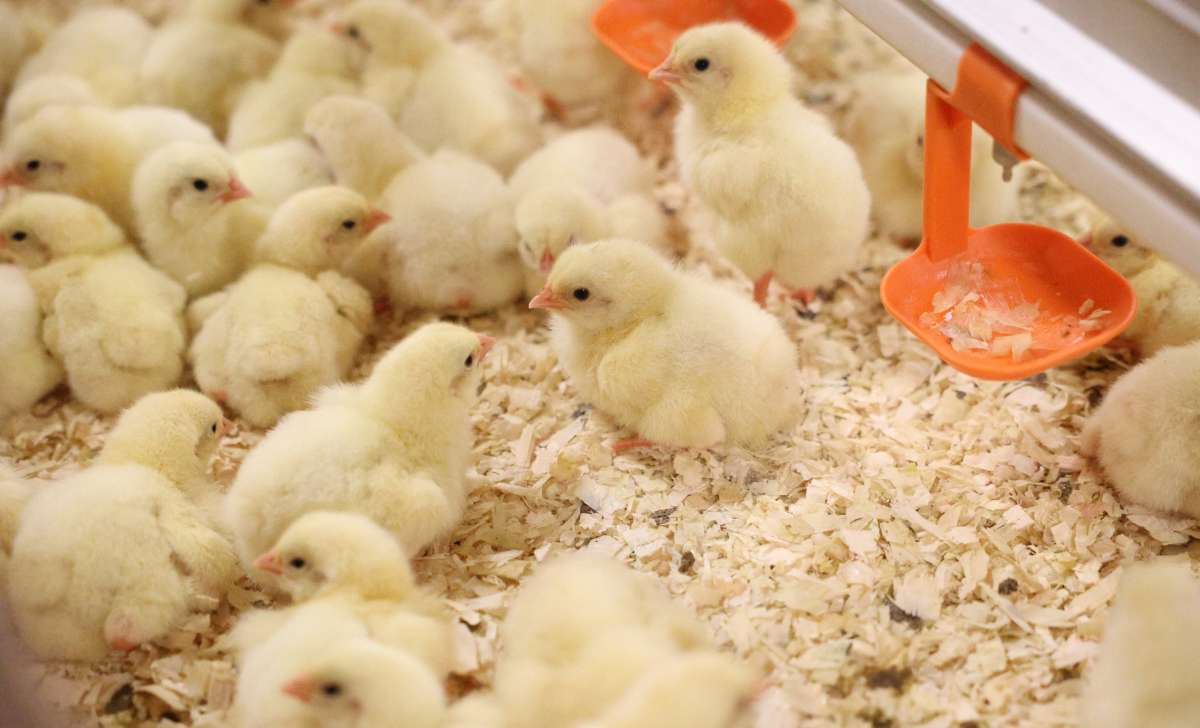
Choroba zielonych mięśni (GMD), lub głęboka miopatia piersiowa (DPM), to niezakaźna, zwyrodnieniowa choroba mięśni występująca u brojlerów i indyków hodowanych na skalę przemysłową. Rosnąca częstość występowania tej choroby w sektorze rozbioru mięsa odzwierciedla dziesięciolecia selekcji pod kątem większej masy rynkowej i większej wydajności mięsa piersiowego (Bilgili i Hess, 2002).
Jak rozwija się uraz
Mniejszy mięsień piersiowy, zwany mięśniem piersiowym delikatnym, jest otoczony sztywną, nieelastyczną powłoką włóknistą pomiędzy mostkiem a większym mięśniem piersiowym. Podczas machania skrzydłami objętość mięśnia zwiększa się nawet o 25 procent (Aviagen, 2025), co powoduje wzrost ciśnienia śródmięśniowego aż do momentu zatrzymania dopływu tlenu. Następuje martwica niedokrwienna. W kolejnych dniach pojawia się charakterystyczne zielone zabarwienie, ponieważ hemoglobina i mioglobina rozkładają się na sole żółciowe.
Ptaki nie wykazują żadnych objawów klinicznych na żadnym etapie. Zmiany chorobowe są niewidoczne przez skórę i niewykrywalne podczas oględzin przedubojowych (Tabler i in. 2014). GMD ujawnia się dopiero podczas trybowania w zakładzie przetwórczym.
Co powoduje machanie skrzydłami
Ryzyko wzrasta po 35. dniu życia, kiedy masa mięśni piersiowych osiąga największą wartość (Aviagen, 2025). Udokumentowane czynniki wywołujące to nagły wzrost natężenia światła, gwałtowne zmiany programu oświetlenia, hałas maszyn, szybkie ruchy ludzi w oborze oraz nieostrożne procedury chwytania ptaków (Bilgili i Hess, 2008; Tabler i in., 2014).
Nagłe zastosowanie fotostymulacji może wywołać reakcję zaskoczenia w całym stadzie. Aviagen (2025) ostrzega przed nagłym wzrostem natężenia światła poniżej 3 luksów i zaleca programy ściemniania od świtu do zmierzchu.
Stada poddane długotrwałemu stresowi lub nerwowe stada są narażone na większe ryzyko. Utrzymujące się odchylenia masy ciała od wartości docelowych dla danej rasy lub rosnąca zmienność w obrębie stada mogą sygnalizować stres środowiskowy, który sprawia, że ptaki silnie reagują na zakłócenia. Ciągłe, zautomatyzowane monitorowanie masy ciała na żywo pozwala wcześnie wykryć te odchylenia.
Analiza trendów wagowych w poszczególnych grupach tuczu przechowywanych w Chmurze BAT pomaga menedżerom zidentyfikować powtarzające się czynniki stresogenne, zanim doprowadzą one do poważniejszych problemów.
Wysoka jednolitość stada pozwala również na pewne przestrzeganie harmonogramów oświetlenia dostosowanych do danej rasy. Regularna ręczna ocena masy ciała pozwala sprawdzić, czy rozkład masy ciała stada staje się bardziej wyrównany, czy też rozbieżności się pogłębiają w miarę rozwoju stada.
Czy spożywanie kurczaka z zielonym mięsem jest bezpieczne?
To pytanie pojawia się wśród konsumentów za każdym razem, gdy zielone mięso kurczaka trafia do sklepów lub na stół. Ponieważ zielone mięso (GMD) jest raczej uszkodzeniem fizjologicznym niż skutkiem działania jakiegokolwiek patogenu lub toksyny, nie stanowi ono zagrożenia dla bezpieczeństwa żywności. Firma Aviagen (2025) potwierdza, że schorzenie to nie ma żadnego znaczenia dla zdrowia publicznego poza estetycznym wyglądem tkanki.
Odrzucone filety są usuwane w zakładzie przetwórczym, a krwawienie z uszkodzonego fileta może również poplamić sąsiedni filet, co wymaga dalszego przycinania. Prognozowane straty wynikające z odrzuconych filetów i przycinania filetów sięgały 7000 dolarów tygodniowo w zakładzie przetwarzającym milion ciężkich brojlerów (Bilgili, 2011). GMD to koszt komercyjny, a nie problem zdrowia publicznego.
Ograniczanie zachorowalności poprzez odpowiednie zarządzanie
Nie ma dostępnego leczenia dla ptaków dotkniętych chorobą. Zapobieganie opiera się na zarządzaniu, które ogranicza przypadki machania skrzydłami (Aviagen, 2025; Tabler i in., 2014). Należy poruszać się po kurniku powoli. Należy stopniowo zwiększać natężenie światła za pomocą ściemniacza. W tygodniach poprzedzających ubój należy zminimalizować hałas generowany przez maszyny. Podczas łapania ptaków należy zachować spokój i unikać przerywania karmienia na dłużej niż cztery godziny.
Dobra jednolitość stada to praktyczny atut, którym dysponują już producenci. Automatyczna waga BAT2 Connect dostarcza ciągłych danych dotyczących żywej wagi, dzięki czemu wydajność stada jest widoczna przez cały cykl produkcyjny.
Ręczna waga do drobiu BAT1 doskonale nadaje się do regularnych pomiarów, które pozwalają uzyskać obraz jednolitości stada niezbędny do pewnego stosowania harmonogramów oświetlenia.
Zarządzanie systemem GMD opiera się na spokojnej i spójnej hodowli od momentu wprowadzenia piskląt do momentu uboju.
Źródła
1.) Aviagen. 2025. Deep Pectoral Myopathy: Reducing the Incidence in Broiler Flocks. Aviagen Brief, Version 2. https://aviagen.com/assets/Tech_Center/Broiler_Breeder_Tech_Articles/English/AviagenBrief-Deep-Pectoral-Myopathies.pdf
2.) Bilgili, S. F. 2011. Finding answers to green muscle disease in poultry. WATTPoultry. https://www.wattagnet.com/articles/8761-finding-answers-to-green-muscle-disease
3.) Bilgili, S. F., and J. B. Hess. 2002. Green muscle disease in broilers increasing. World Poultry 18(4):42–43.
4.) Bilgili, S. F., and J. B. Hess. 2008. Green muscle disease: Reducing the incidence in broiler flocks. Aviagen Brief, March 2008.
5.) Dickinson, E. M., J. O. Stephens, and D. H. Helfer. 1968. A degenerative myopathy in turkeys. Proc. 17th West. Poult. Dis. Conf., University of California, Davis.
6.) Richardson, J. A., J. Burgener, R. W. Winterfield, and A. S. Dhillon. 1980. Deep pectoral myopathy in seven-week-old broiler chickens. Avian Dis. 24:1054–1059.
7.) Tabler, T., F. D. Clark, J. R. Moyle, M. Farnell, and J. Wells. 2014. Deep Pectoral Myopathy (Green Muscle Disease) in Broilers. Mississippi State University Extension Service, Information Sheet 1976. https://extension.umd.edu/sites/extension.umd.edu/files/2022-01/IS1976%20Deep%20Pectoral%20Myopathy.pdf