
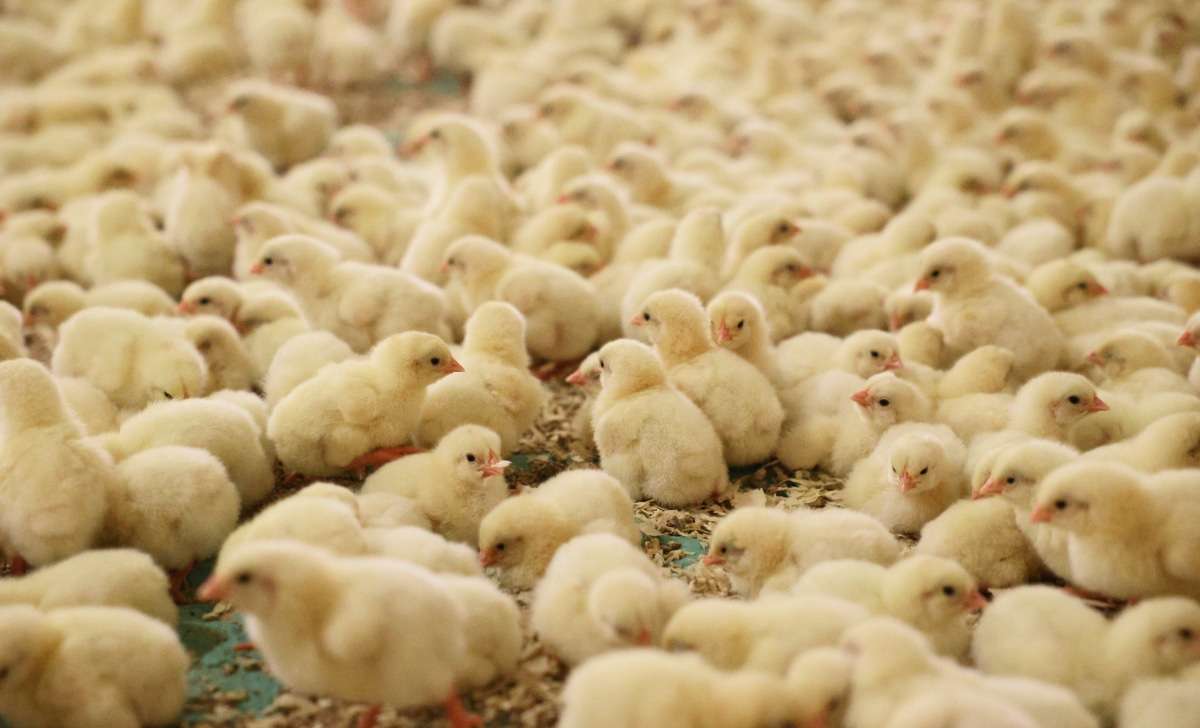
Anyone who keeps a small backyard flock has probably watched a hen fling loose dirt over her back and wondered why she bothers. A chicken dust bath is simple on the surface: a shallow scrape in dry ground, sand, or a mixed substrate that a bird works into her feathers with her wings and feet. For commercial poultry operations, that same everyday behavior carries far more weight than curiosity alone.
Why Dust Bathing Is Not Optional
Dust bathing follows an internal rhythm, not a passing whim. Hens denied loose substrate show a mounting drive to bathe, some pushing through added effort just to reach litter (Vestergaard, 1982; Widowski and Duncan, 2000). The behavior strips excess lipid from feathers and skin, helping birds maintain insulation and plumage condition. It may also support ectoparasite control, depending on substrate. Diatomaceous earth abrades a mite’s waxy outer layer, causing fatal water loss, while ordinary sand has no such effect (Martin and Mullens, 2012; Vezzoli et al., 2015).
Substrate Choice and the Dust Bath Recipe Question
Offered a choice among sand, wood shavings, rice hulls, and paper bedding, broilers consistently choose sand (Shields et al., 2004). Commercial trials with an effective dust bath recipe, a fine blend of sand and partially used litter, found birds engage with it more readily than fresh shavings (Baxter et al., 2018). For parasite control specifically, diatomaceous earth outperforms sand despite being less preferred (Martin and Mullens, 2012).
Dust Bathing as a Flock Welfare Signal
Dust bathing tends to happen in waves in group housing, and synchronized bathing can overcrowd litter areas when space or substrate is limited (Campbell et al., 2016). Commercial conditions add a complication. Broiler litter often cakes over by the second half of the grow-out
, and layer litter is gradually eaten and trampled down, both leaving less material to bathe in (Pepper and Dunlop, 2021). A dedicated dust box with sand or diatomaceous earth ensures the flock always has access to workable material (Baxter et al., 2018).
Connecting Behavior to Weight Data
Ectoparasite pressure shows why weight data alone is incomplete. Mite infestations usually need to become moderate to heavy before they measurably affect feed intake, vegg production, or weight gain (Flochlay et al., 2017), so a growth decline often reflects a problem that has been building for a while.
Physical handling catches this earlier. When each bird is caught and weighed individually, mites on the handler’s hands or visible on skin and feathers are obvious right away, well before any weight change appears, making that direct contact a welfare check in its own right.
Reduced natural movement, including dust bathing, has also been linked to poorer leg condition in broilers, since these behaviors function as exercise supporting healthy gait (Shields et al., 2004). Continuous automated weight tracking still helps confirm whether an issue has progressed enough to affect flock wide growth.
Turning Data Into Action
The BAT2 Connect automatic scale records live weight data throughout the day, giving producers a running baseline against which activity related dips can be checked without waiting for a scheduled weighing session.
Manual weighing sessions using the BAT1 manual scale complement that continuous stream. Because each bird is caught individually, handlers can pair a weight reading with a direct look at feather condition, fleshing, and mobility, the same physical checks that show whether a flock’s dust bathing behavior matches its actual welfare status.
Producers who want both data streams in one place can use the BAT Cloud data platform to analyze weight trends against house records and litter management logs. A dip in growth alongside a drop in litter activity usually traces back to the same root cause root cause, whether that is ectoparasite pressure, poor litter quality, or overcrowding.
References
Baxter, M., Bailie, C. L., and O’Connell, N. E. (2018). Evaluation of a dustbathing substrate and straw bales as environmental enrichments in commercial broiler housing. Applied Animal Behaviour Science, 200, 78-85. https://www.sciencedirect.com/science/article/abs/pii/S0168159117303246
Campbell, D. L. M., Makagon, M. M., Swanson, J. C., and Siegford, J. M. (2016). Litter use by laying hens in a commercial aviary: dust bathing and piling. Poultry Science, 95(1), 164-175. https://www.sciencedirect.com/science/article/pii/S003257911932108X
Shields, S. J., Garner, J. P., and Mench, J. A. (2004). Dustbathing by broiler chickens: a comparison of preference for four different substrates. Applied Animal Behaviour Science, 87, 69-82. https://www.sciencedirect.com/science/article/abs/pii/S016815910400019X
Vestergaard, K. (1982). Dust-bathing in the domestic fowl, diurnal rhythm and dust deprivation. Applied Animal Ethology, 8, 487-495. https://www.sciencedirect.com/science/article/abs/pii/030437628290061X
Vezzoli, G., Mullens, B. A., and Mench, J. A. (2015). Dustbathing behavior: do ectoparasites matter? Applied Animal Behaviour Science, 169, 93-99. https://www.sciencedirect.com/science/article/abs/pii/S0168159115001665
Widowski, T. M., and Duncan, I. J. H. (2000). Working for a dustbath: are hens increasing pleasure rather than reducing suffering? Applied Animal Behaviour Science, 68, 39-53. https://www.sciencedirect.com/science/article/abs/pii/S0168159100000885