
Recognizing sick chicken symptoms early prevents disease spread and economic losses. Research shows viral diseases account for 24.5% of mortality in production cycles, while bacterial diseases contribute 11.2% (Hoque et al., 2025). Understanding how to tell if a chicken is sick requires vigilant observation of multiple health indicators.
Poultry respiratory symptoms represent the most visible disease category. Birds display disheveled feathers, loss of appetite, and chicken lethargy alongside nasal discharge, coughing, and panting (Chen et al., 2025). Infected chickens produce excess mucus, creating matted feathers with a characteristic brownish collar appearance (Olanrewaju et al., 2019). These early signs of illness in chickens demand immediate attention.
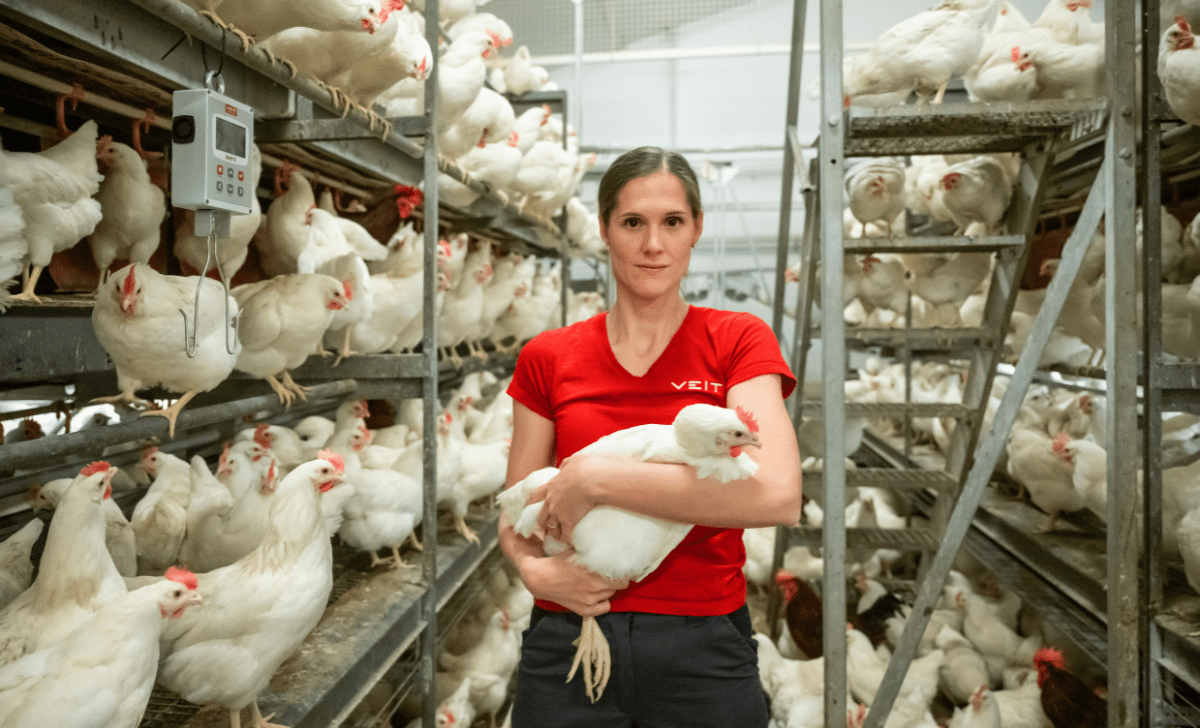
Chicken health indicators extend beyond respiratory distress. Effective poultry health monitoring relies on precision weighing systems. The BAT2 Connect automatic poultry scale enables farmers to track body weight uniformity and calculates actionable statistics like coefficient of variation to detect deviations signaling health problems. Monitoring body weight allows early detection of welfare issues and enables counteractions through adapted management (Mels et al., 2023). The BAT1 manual poultry scale provides reliable assessment for smaller operations.
Egg production decline serves as a sensitive health barometer. Newcastle disease triggers dramatic drops where production plummets to zero within days (Jacob et al., 2018). Layers become depressed with partial to complete laying cessation and thin shelled eggs (Stępień-Pyśniak et al., 2021). Identifying sick poultry in flock requires attention to production changes alongside behavioral shifts.
Behavioral assessment forms the cornerstone of chicken health assessment techniques. Healthy chickens remain active and curious. Sick birds become isolated, display reduced feed intake, and exhibit lethargy (Jahan Kaweh, 2024). Flocks with severe respiratory disease produce audible coughing and sneezing, while Infectious Coryza creates virtual silence (Olanrewaju et al., 2019).
The chicken disease symptoms guide addresses systematic observation. Examine heads, eyes, combs, and wattles for swelling or discharge. Look for lameness, paralysis, or general weakness (Mississippi State University Extension, 2024). Changes in droppings indicate digestive compromise. Feather deterioration beyond normal molting signals nutritional deficiencies or parasites.
Identifying ill chickens becomes an easier task when farmers maintain detailed records. The BAT Cloud system facilitates data monitoring and comparison against baseline parameters. Documented weight trends, alongside mortality rates and environmental factors, support rapid diagnosis.
Early intervention saves flocks. Farmers implementing routine monitoring systems contribute significantly to better welfare (Mels et al., 2023). Weight checks, production tracking, and behavioral observation form an integrated approach for detecting signs of poultry disease. Biosecurity remains paramount. Limit visitors, quarantine new birds for 30 days, and maintain strict hygiene (Merck Veterinary Manual, 2025).
References
Chen, S., et al. (2025). Review of respiratory syndromes in poultry: pathogens, prevention, and control measures. Veterinary Research, 56(1), 36. https://veterinaryresearch.biomedcentral.com/articles/10.1186/s13567-025-01506-y
Hoque, M.A., et al. (2025). Economic impact of chicken diseases and other causes of morbidity or mortality in backyard farms in low-income and middle-income countries: a systematic review and meta-analysis. BMC Veterinary Research, 21(1), 104. https://bmcvetres.biomedcentral.com/articles/10.1186/s12917-025-04549-7
Jacob, J.P., et al. (2018). Factors Affecting Egg Production in Backyard Chicken Flocks. University of Florida IFAS Extension, PS-35. https://edis.ifas.ufl.edu/publication/PS029
Jahan Kaweh. (2024). Chicken Weight Gain: Why isn’t my chicken putting on weight? https://www.jahankaveh.com/en/chicken-weight-gain-weight-loss-in-poultry/
Mels, C., et al. (2023). Development and evaluation of an animal health and welfare monitoring system for veterinary supervision of pullet farms. Preventive Veterinary Medicine, 217, 105929. https://doi.org/10.1016/j.prevetmed.2023.105929
Merck Veterinary Manual. (2025). Common Infectious Diseases in Backyard Poultry. https://www.merckvetmanual.com/exotic-and-laboratory-animals/backyard-poultry/common-infectious-diseases-in-backyard-poultry
Mississippi State University Extension. (2024). Poultry Disease Diagnosis. http://extension.msstate.edu/publications/publications/poultry-disease-diagnosis
Olanrewaju, H.A., et al. (2019). Poultry Disease. In: Encyclopedia of Agricultural Science and Technology. ScienceDirect Topics. https://www.sciencedirect.com/topics/agricultural-and-biological-sciences/poultry-disease
Stępień-Pyśniak, D., et al. (2021). Avian diseases which affect egg production and quality. Worlds Poultry Science Journal, 77(2), 199-215. https://pmc.ncbi.nlm.nih.gov/articles/PMC7152417/