
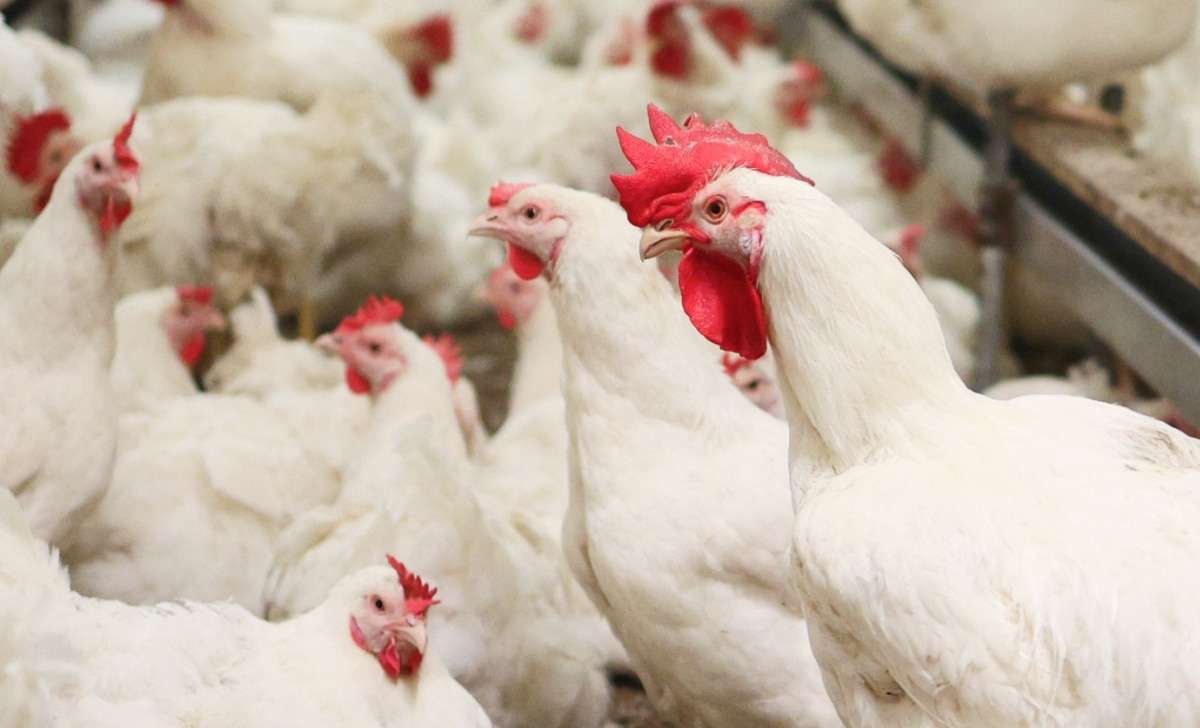
A healthy chicken runs hot by mammalian standards. Knowing what counts as normal helps producers catch problems before a flock shows visible signs.
Normal Temp Chickens Should Hold: Ranges by Breed and Hybrid
Chickens are homeothermic, maintaining a stable internal temperature regardless of the surrounding air (University of Kentucky AFS, n.d.). For adult birds, that stable point sits between 40.6°C and 41.7°C (105°F to 107°F), with deep body temperature commonly cited near 41°C in comfortable, healthy birds (University of Kentucky AFS, n.d.; Wasti et al., 2020).
This range is not identical across the flock. Smaller breeds tend to run slightly warmer than larger ones, and males typically read marginally higher than females, likely reflecting greater muscle mass and metabolic rate (University of Kentucky AFS, n.d.). Newly hatched chicks start lower, around 39.7°C, climbing steadily over the first three weeks (University of Kentucky AFS, n.d.; Cobb-Vantress, 2021).
Commercial hybrids offer useful reference points. Ross 308 broilers under thermoneutral conditions showed rectal temperatures of 39.1°C to 40.6°C, rising as high as 43.2°C under cyclical heat stress (Yehia et al., 2024). In Lohmann LSL Lite pullets, cloacal temperature ranged from approximately 41.1°C to 41.6°C at ambient temperatures of 20°C and 25°C, rising to 42.3°C at 35°C ambient, consistent with the study’s finding that birds maintained normal body temperature within the thermoneutral zone (Cândido et al., 2020). Genetic traits like the naked neck gene have also been studied for improving heat tolerance in some breed lines (Wasti et al., 2020).
How to Check a Chicken’s Body Temperature
Monitoring chicken body temperature on farm usually means a cloacal reading with a quick-read digital thermometer, inserted gently while the bird is securely supported (Cobb-Vantress, 2021). This is accurate but invasive at scale. Infrared thermography offers a non-contact alternative: surface temperature at the eye, comb, or body area correlates strongly with cloacal readings, making it practical for screening large groups (Cândido et al., 2020).
Continuous live weight monitoring adds a non-invasive complement to spot checks, since unexpected drops in average daily gain frequently precede or accompany the thermal stress events that drive temperature out of range.
Why Chicken Body Temperature Deviates From Normal
Environmental heat stress is the most common cause: when conditions exceed the thermoneutral zone, birds pant and redirect blood flow to dissipate heat, and core temperature climbs once cooling cannot keep pace (Yehia et al., 2024). Cold stress works in reverse, particularly in young or thinly feathered birds still developing thermoregulation.
Disease is the other major driver. Fever is a recognised clinical sign in several poultry respiratory infections, including Newcastle disease and infectious bronchitis, often appearing alongside laboured breathing before mortality rises (DuPont Animal Health Solutions, n.d.; Merck Veterinary Manual, 2024). A bird running persistently hot or cold relative to flockmates, with no obvious cause, warrants closer inspection. The same tool also detects plumage damage: bare skin radiates more heat than feathered areas, making featherless patches clearly visible in thermal images (Pichová et al., 2017).
Catching Temperature Problems Early
Early detection means spotting subtle shifts before they become visible welfare problems. The BAT2 Connect automatic poultry scale builds a passive daily baseline as birds move through the house, making deviations easier to flag without disturbing the flock.
For targeted checks, the BAT1 manual poultry scale lets handlers pair weighing with hands-on assessment, including fleshing scores, when a specific bird or section needs closer attention.
Catching and weighing birds individually also delivers strong per-session sample integrity, complementing the continuous coverage automated systems provide.
Pairing scale data with a centralised view of flock trends across houses and cycles helps producers tell a one-off dip from a developing pattern, supporting faster decisions on ventilation, density, or veterinary follow-up.
Normal chicken body temperature sits in a narrow, well-documented band. Watching for deviations, through direct measurement or weight trends that move with them, remains one of the most reliable ways to catch thermal stress and disease early.
References
1.) Cândido, M.G.L., Tinôco, I.F.F., Albino, L.F.T., Freitas, L.C.S.R., Santos, T.C., Cecon, P.R. and Gates, R.S. (2020). Effects of heat stress on pullet cloacal and body temperature. Poultry Science, 99(5), 2469-2477. https://pmc.ncbi.nlm.nih.gov/articles/PMC7597385/
2.) Cobb-Vantress (2021). Cobb Broiler Management Guide. Cobb-Vantress Inc. https://www.cobbgenetics.com/assets/Cobb-Files/Broiler-Guide_English-2021-min.pdf
3.) DuPont Animal Health Solutions (n.d.). Diagnosing respiratory problems in poultry: Common signs are common. The Poultry Site. https://www.thepoultrysite.com/articles/diagnosing-respiratory-problems-in-poultry-common-signs-are-common
4.) Merck Veterinary Manual (2024). Newcastle disease in poultry. https://www.merckvetmanual.com/poultry/newcastle-disease-and-other-paramyxovirus-infections/newcastle-disease-in-poultry
5.) Pichová, K., Bilčík, B. and Košt’ál, L. (2017). Assessment of the effect of housing on feather damage in laying hens using IR thermography. Animal, 11(4), 661–669. https://www.cambridge.org/core/journals/animal/article/abs/assessment-of-the-effect-of-housing-on-feather-damage-in-laying-hens-using-ir-thermography/C79E712E1D9C4FBD0E28A83A46A36A36
6.) University of Kentucky AFS (n.d.). Chapter 7: Air temperature. Poultry Production Manual, Department of Animal & Food Sciences. https://afs.mgcafe.uky.edu/poultry/chapter-7-air-temperature
7.) Wasti, S., Sah, N. and Mishra, B. (2020). Impact of heat stress on poultry health and performances, and potential mitigation strategies. Animals, 10(8), 1266. https://www.ncbi.nlm.nih.gov/pmc/articles/PMC7460371/
8.) Yehia, M., Askri, A., Achour, A., Allard Prus, J.M., Ouellet, V. and Alnahhas, N. (2024). Rectal temperature and heat transfer dynamics in the eye, face, and breast of broiler chickens exposed to moderate heat stress. Poultry Science, 104(2), 104748. https://pmc.ncbi.nlm.nih.gov/articles/PMC11757760/