
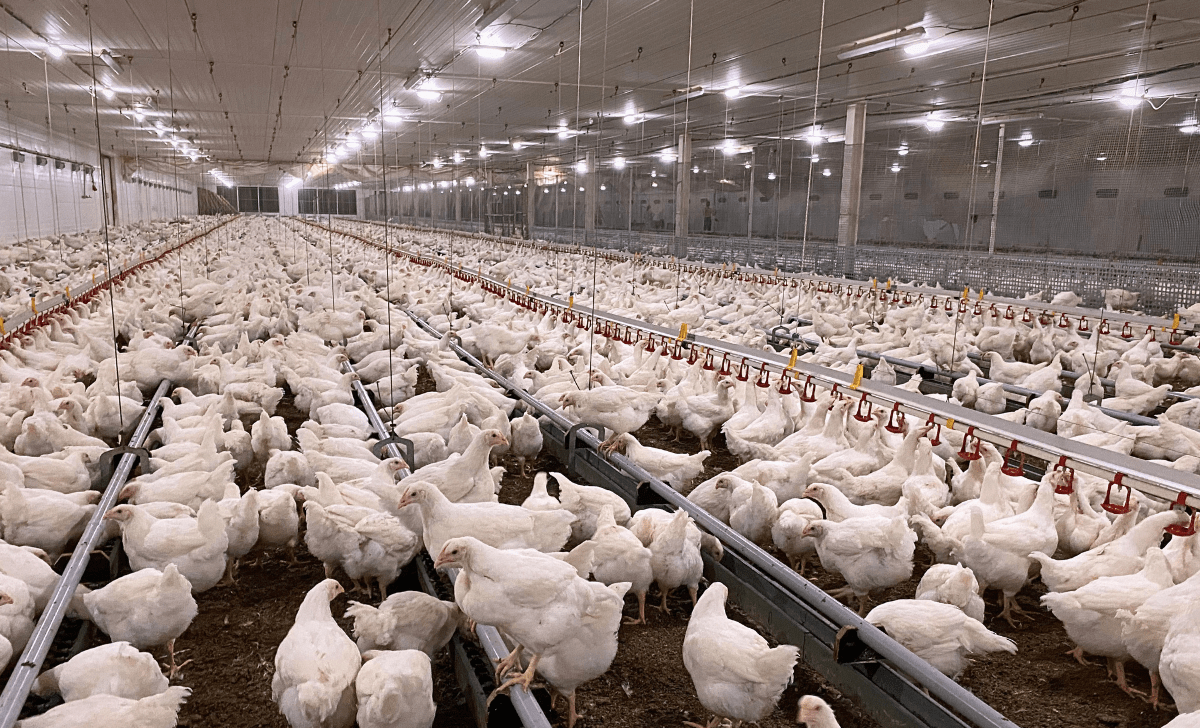
Comprender los requisitos de vacunación avícola es fundamental para una gestión exitosa de las aves. Si bien los veterinarios son los principales responsables de los programas de vacunación, los ganaderos se benefician al conocer los plazos críticos y el razonamiento detrás de los protocolos de inmunización.
Cuándo vacunar a los pollos
El programa de vacunación de las aves de corral comienza inmediatamente después del nacimiento. La vacuna contra la enfermedad de Marek debe administrarse el primer día para lograr una tasa de protección del 97 %, en comparación con solo el 45 % si se retrasa más de dos semanas (Backyard Chickens Hub, 2025). Este margen de tiempo tan limitado hace que la sincronización sea crucial para el éxito en la prevención de enfermedades, por lo que las grandes explotaciones suelen utilizar máquinas de vacunación automatizadas para administrar las vacunas.
programa integral de inmunización de pollos suele incluir vacunas contra la enfermedad de Newcastle, la bronquitis infecciosa, la bursitis infecciosa y la viruela aviar, administradas a intervalos específicos durante el desarrollo del ave (Manual Veterinario Merck, 2024). El calendario de vacunación avícola para granjas varía según la región y las enfermedades locales, por lo que se requiere la consulta con veterinarios cualificados para diseñar protocolos adecuados.
Los programas de vacunación para pollos de engorde difieren de los de ponedoras debido a las diferencias en los plazos de producción. Las vacunas esenciales para pollos de engorde se centran en enfermedades de acción rápida y alto impacto durante el breve período de engorde, de cinco a ocho semanas ( Bivatec , 2024).
¿Por qué es necesaria la vacunación adecuada?
Las vacunas para la prevención de enfermedades avícolas protegen a las aves de corral de pérdidas económicas devastadoras. La coccidiosis le cuesta a la industria avícola mundial aproximadamente 10 400 millones de libras esterlinas anuales (entre 7700 y 13 000 millones de libras esterlinas) en gastos de vacunación, mortalidad y control, según los precios de 2016 (Blake et al., 2020). Cuando las medidas preventivas fallan, los brotes de Newcastle y bursitis infecciosa a menudo obligan a los ganaderos a destruir aves enteras, lo que causa pérdidas astronómicas.
Las mejores prácticas de inmunización de pollos incluyen el almacenamiento adecuado de las vacunas a una temperatura de 2 a 8 °C, la verificación de las fechas de caducidad y la administración completa de la dosis (Guía de Manejo de Reproductoras Cobb, 2021). Solo las aves sanas deben recibir vacunas, ya que las aves estresadas o enfermas presentan una respuesta inmunitaria reducida. Desviarse de estas normas puede afectar la eficacia de las vacunas y reintroducir el riesgo de infección en la parvada.
Precauciones contra virus y bacterias
El manejo de la salud avícola va más allá de los protocolos de vacunación. Las vacunas contra enfermedades virales brindan protección preventiva contra infecciones virales, pero no contra bacterias. Las enfermedades causadas por bacterias suelen manifestarse en los datos de peso antes de que aparezcan los síntomas visuales ( Okinda et al., 2019). Por esta razón, monitorear la ganancia de peso animal permite detectar la aparición de enfermedades y problemas de vitalidad, lo que permite tomar las medidas necesarias ( Menesatti et al., 2014).
El La báscula avícola automática BAT2 Connect proporciona un monitoreo continuo del peso, lo que permite la detección temprana de enfermedades emergentes en las aves para una intervención oportuna. Investigaciones confirman que sistemas de pesaje automático como el BAT2 pueden identificar desviaciones de salud días antes de que se hagan visibles los signos clínicos ( Mels et al., 2023). Para operaciones más pequeñas, La báscula avícola manual BAT1 proporciona mediciones precisas durante intervalos de monitoreo programados.
Integración de datos de peso a través de BAT Cloud permite una supervisión integral de las aves, combinando los registros de vacunación con las métricas de rendimiento. Este enfoque respalda el principio de la guía de vacunación de pollos : la prevención mediante la inmunización funciona mejor junto con sistemas de monitoreo riguroso.
Referencias
Backyard Chickens Hub. (2025). Chicken vaccination schedule 2025: Complete timeline. https://backyardchickenshub.com/blog/chicken-vaccination-schedule/
Bivatec. (2024). Broiler & layer poultry vaccination schedule & guide. https://www.bivatec.com/blog/standard-vaccination-schedule-for-broilers-and-layers
Cobb Breeder Management Guide. (2021). Biosecurity and vaccination. Cobb-Vantress. https://www.cobb-vantress.com/assets/Cobb-Files/2024-Cobb-Breeder-Guide-English.pdf
Menesatti, P., Costa, C., Antonucci, F., Steri, R., Pallottino, F., & Catillo, G. (2014). A low-cost stereovision system to estimate size and weight of live sheep. Computers and Electronics in Agriculture, 103, 33-38. https://doi.org/10.1016/j.compag.2014.01.018
Mels, C., Niebuhr, K., Futschik, A., Rault, J. L., & Waiblinger, S. (2023). Development and evaluation of an animal health and welfare monitoring system for veterinary supervision of pullet farms. Preventive Veterinary Medicine, 217, 105929. https://doi.org/10.1016/j.prevetmed.2023.105929
Merck Veterinary Manual. (2024). Vaccination programs for poultry. Retrieved from https://www.merckvetmanual.com/poultry/nutrition-and-management-poultry/vaccination-programs-for-poultry
Okinda, C., Nyalala, I., Korohou, T., Okinda, C., Wang, J., Achieng, T., Wamalwa, P., Mang, T., & Shen, M. (2019). A machine vision system for early detection and prediction of sick birds: A broiler chicken model. Biosystems Engineering, 188, 229-242. https://doi.org/10.1016/j.biosystemseng.2019.09.007
Blake, D. P., Knox, J., Dehaeck, B., Huntington, B., Rathinam, T., Ravipati, V., Ayoade, S., Gilbert, W., Adebambo, A. O., Jatau, I. D., Raman, M., Parker, D., Rushton, J., & Tomley, F. M. (2020). Re-calculating the cost of coccidiosis in chickens. Veterinary Research, 51(1), 115. https://doi.org/10.1186/s13567-020-00837-2