
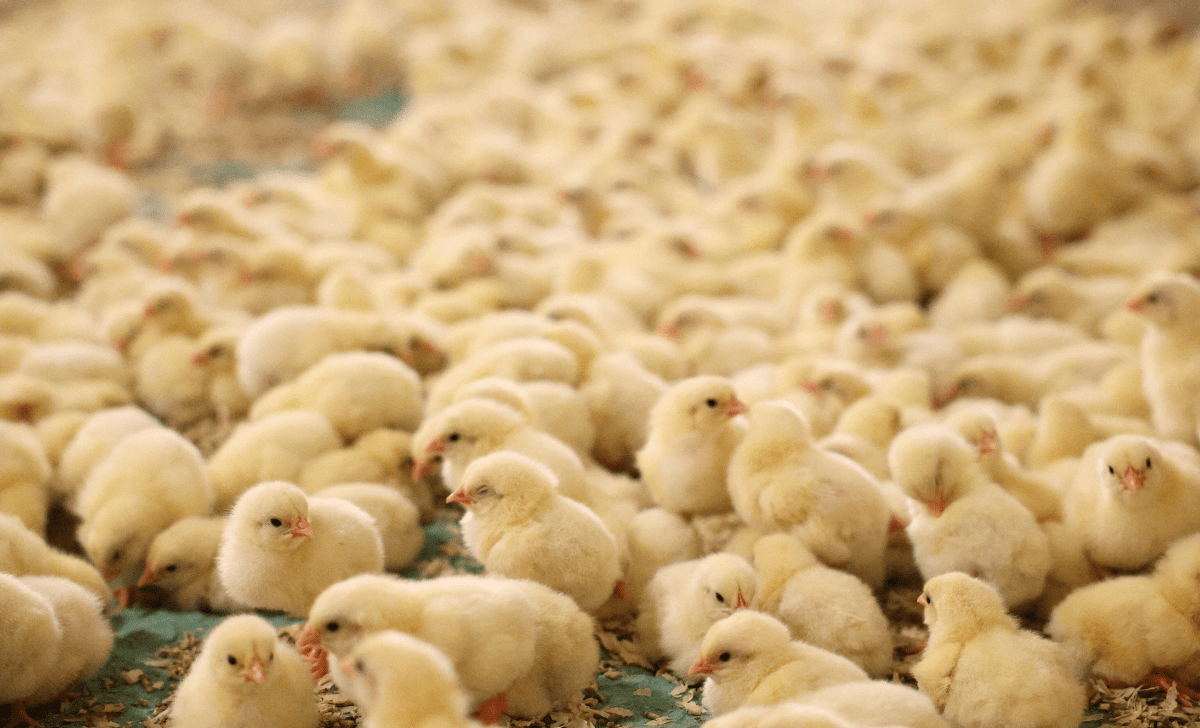
Chickens are often underestimated, yet these remarkable birds possess surprising capabilities that directly impact production efficiency and welfare management. Understanding chicken intelligence facts and biological characteristics helps modern poultry producers optimize their operations. From embryonic development to cognitive abilities, these interesting facts about chickens reveal why precision management matters for both broiler and layer systems.
-
Chicken Embryo Hearts Beat Faster Than Human Hearts
One surprising fact about chickens relates to embryonic development. A chicken embryo’s heart begins beating at just 30 hours of incubation and reaches peak rates of approximately 280 beats per minute by days 14-15 (Tazawa et al., 2001). This rapid cardiac development is crucial for proper growth, and monitoring heart rate patterns can help predict hatch success.
-
Chickens See More Colors Than Humans
Among the most amazing facts you didn’t know about chickens is their superior vision. While humans have trichromatic vision (three color receptors), chickens possess tetrachromatic vision with four types of cone cells, including ultraviolet light perception (Prescott and Wathes, 1999). This ability allows chickens to detect wavelengths from 350-780 nm compared to humans‘ 380-740 nm range. Hens use UV cones to identify healthy chicks whose growing feathers reflect UV light, and to locate high-quality food sources more efficiently than visible light alone would allow.
-
Remarkable Memory Rivals Other Intelligent Animals
Chicken intelligence facts continue to surprise researchers. Studies demonstrate that chickens can recognize and remember up to 100 individual faces, both chicken and human, and retain these memories for extended periods (Marino, 2017). They exhibit episodic memory, allowing them to recall specific past events and locations. Research also shows chickens demonstrate self-control comparable to human toddlers, choosing delayed gratification for larger rewards (Abeyesinghe et al., 2005). Regular weighing using the BAT1 manual poultry scale helps establish predictable routines that reduce stress, as chickens quickly learn to associate handlers and equipment with positive experiences.
-
Egg Formation Takes Roughly 24 Hours
Understanding interesting facts about chickens related to reproduction reveals egg formation requires approximately 23 hours from start to finish, with shell calcification alone accounting for approximately 18.5 hours of that time (Fu et al., 2025). Even peak-producing hens cannot physically lay an egg every single day due to this biological timeline. The ovulation process, triggered by specific lighting patterns and nutritional status, means management decisions about photoperiod and calcium availability during shell formation hours directly impact production efficiency.
-
Asymmetric Vision Development Before Hatching
For another piece of fascinating chicken trivia, chicks develop specialized vision for different tasks while still in the egg. Just before hatching, embryos position themselves so the right eye faces the shell (exposed to light) while the left eye remains against the body in darkness. This creates permanent functional differences: the right eye develops near-sightedness optimized for close-range foraging, while the left eye develops far-sightedness for distance predator detection (Rogers, 1990). This remarkable adaptation demonstrates how chickens evolved sophisticated survival mechanisms, making them highly successful in diverse production environments.
-
Processing Visual Information Faster Than Humans
Another intriguing fact about chickens involves their exceptional visual processing speed. Chickens can process approximately 150-200 images per second, compared to humans‘ 25-30 frames per second (Lisney et al., 2012). This means fluorescent lighting, which appears constant to humans, creates a strobe-like effect for chickens, potentially causing stress and reduced performance. This heightened sensitivity explains why LED lighting systems produce better welfare outcomes and growth performance, as they eliminate the imperceptible-to-humans flicker that chickens experience with conventional lighting.
-
Newborn Chicks Display Cognitive Abilities of Toddlers
Perhaps the most amazing facts you didn’t know about chickens involve their cognitive abilities from day one. Research shows one- to four-day-old chicks can perform simple arithmetic with numbers under five, understand object permanence, and make logical deductions (Rugani et al., 2009). These early cognitive abilities, combined with spatial memory and navigational skills using the sun’s position and Earth’s magnetic field, demonstrate remarkable intelligence that challenges traditional perceptions of avian cognition. Maintaining consistent management practices from day one supports optimal cognitive and physical development.
These chicken behavior facts and biological insights demonstrate that chickens are complex, intelligent animals whose sensory capabilities and cognitive functions respond to their environment in sophisticated ways. By understanding these characteristics, producers can make informed decisions about lighting, handling routines, and management practices that enhance both welfare and productivity. Modern monitoring tools such as specialized poultry scales enable data-driven approaches that respect these natural abilities while optimizing commercial outcomes.
References:
Abeyesinghe, S.M., Nicol, C.J., Hartnell, S.J., & Wathes, C.M. (2005). Can domestic fowl, Gallus gallus domesticus, show self-control? Animal Behaviour, 70(1), 1-11. https://doi.org/10.1016/j.anbehav.2004.10.011
Aubert, A.E., Beckers, F., Ramaekers, D., Verheyden, B., Leribaux, C., Aerts, J.M., & Berckmans, D. (2004). Heart rate and heart rate variability in chicken embryos at the end of incubation. Experimental Physiology, 89(2), 199-208. https://doi.org/10.1113/expphysiol.2003.027037
Lisney, T.J., Rubene, D., Rozsa, J., Løvlie, H., Håstad, O., & Ödeen, A. (2011). Behavioural assessment of flicker fusion frequency in chicken Gallus gallus domesticus. Vision Research, 51(12), 1324-1332. https://doi.org/10.1016/j.visres.2011.04.009
Marino, L. (2017). Thinking chickens: A review of cognition, emotion, and behavior in the domestic chicken. Animal Cognition, 20(2), 127-147. https://doi.org/10.1007/s10071-016-1064-4
Prescott, N.B., & Wathes, C.M. (1999). Spectral sensitivity of the domestic fowl (Gallus g. domesticus). British Poultry Science, 40(3), 332-339. https://doi.org/10.1080/00071669987412
Rogers, L.J. (1990). Light input and the reversal of functional lateralization in the chicken brain. Behavioural Brain Research, 38(3), 211-221. https://doi.org/10.1016/0166-4328(90)90176-F
Rugani, R., Fontanari, L., Simoni, E., Regolin, L., & Vallortigara, G. (2009). Arithmetic in newborn chicks. Proceedings of the Royal Society B: Biological Sciences, 276(1666), 2451-2460. https://doi.org/10.1098/rspb.2009.0044
Tazawa, H., Akiyama, R., & Moriya, K. (2002). Development of cardiac rhythms in birds. Comparative Biochemistry and Physiology Part A: Molecular & Integrative Physiology, 132(4), 675-689. https://doi.org/10.1016/S1095-6433(02)00125-3
Fu, Y., Delezie, E., Qi, G.H., & Wang, J. (2025). Optimizing eggshell quality in extended laying periods: Insights and strategies. Animal Nutrition. https://doi.org/10.1016/j.aninu.2025.11.003