
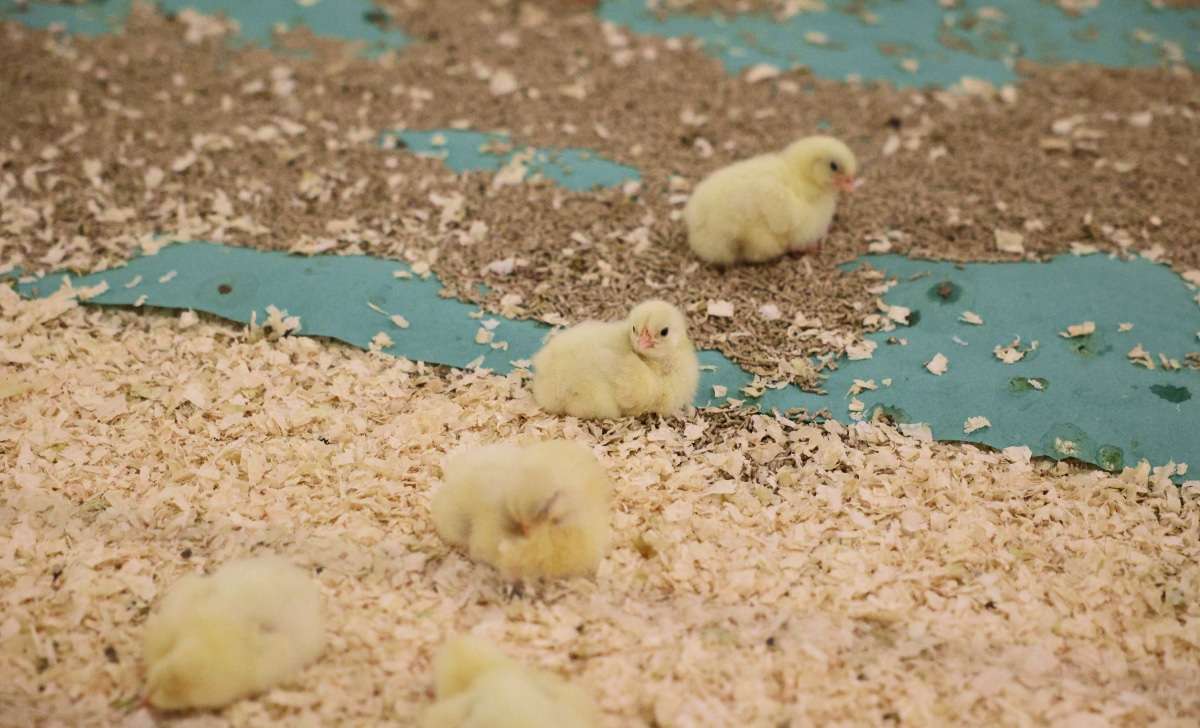
Choosing the right bedding for chickens is one of the most consequential housing decisions a producer can make. Litter does far more than cushion the floor. It absorbs moisture, dilutes excreta, insulates birds from cold surfaces, and allows natural behaviors like foraging, scratching and dust bathing (Cobb, 2021). When bedding fails at any of these jobs, the consequences appear in flock health and weight data.
Why Chicken Bedding Matters
Wet or compacted chicken bedding raises ammonia, promotes footpad dermatitis, and opens pathways for secondary infections (Shepherd and Fairchild, 2010). De Jong et al. (2014) showed that wet litter alone reduces welfare, technical performance, and carcass yield in broilers. Birds on degraded litter eat less, convert feed poorly, and finish lighter. In addition to manual checks and ammonia sensors, tracking these shifts through continuous live weight monitoring helps managers catch bedding-related losses before they compound.
Common Bedding Types Compared
Before evaluating individual materials, it is worth noting that the quality of any bedding at the point of delivery matters more than the type itself. Litter that arrives at the house with elevated moisture or fungal contamination, particularly Aspergillus spores, compromises flock health from day one regardless of its absorption rating or cost profile (Cobb, 2021).
Wood shavings remain the industry standard. Kiln-dried softwood shavings offer strong absorption and low dust, though hardwood varieties may contain tannins that risk toxicity or crop damage (Cobb, 2021). Supply constraints are growing as other industries compete for wood byproducts (Diarra et al., 2021).
Chopped straw is affordable and widely available. Wheat straw absorbs more moisture than barley, but all straw should be chopped to 2 cm or shorter to limit caking and allow chicks to move around more easily (Cobb, 2021). Unmanaged straw compacts fast and drives litter moisture upward. Regular manual flock weighing with individual bird handling can reveal welfare issues potentially linked to poor straw quality.
Rice hulls resist compaction and are cost-effective where supply exists. A minimum depth of 5 cm on concrete floors is advised (Cobb, 2021). Garcês et al. (2013) found rice hulls comparable to wood shavings for litter quality and broiler performance.
Hemp bedding for chickens has gained attention for superior absorption. Hemp hurd holds roughly four times its weight in moisture, compared to about 2.5 times for wood shavings (Dominion Hemp, 2021). That capacity keeps surfaces drier longer, which benefits flocks when the best bedding for chickens in winter is whatever stays driest. Hemp also produces less airborne dust than straw or sawdust. Cost and limited availability remain its drawbacks for industrial applications.
Sand releases surface moisture quickly and resists mold, but offers almost no thermal insulation, making it unsuitable for brooding or cold housing (Bilgili et al., 2009).
Monitoring the Impact on Flock Weight
Whatever bedding is best for chickens in a given operation, keeping litter moisture below 35% is a core target (Cobb, 2021). The squeeze test is a useful field check, but objective weight data confirms whether conditions truly support growth.
The BAT2 Connect automatic poultry scale records daily flock weights without handling, flagging environmental drag on gain early.
For periodic sample weighing, the BAT1 manual poultry scale delivers accurate individual weights alongside hands-on welfare checks like fleshing scores and footpad condition.
Uploading data from either scale to the BAT Cloud data platform builds a continuous record that ties litter changes to measurable outcomes.
Matching Bedding to Your Operation
No single material suits every chicken house. The right choice depends on climate, cost, supply reliability, and production type. What matters most is that bedding stays dry and friable, and that consistent weight monitoring closes the loop between housing conditions and bird performance.
References
1.) Bilgili, S.F., Hess, J.B., Blake, J.P., Macklin, K.S., Saenmahayak, B. and Sibley, J.L. (2009). Influence of bedding material on footpad dermatitis in broiler chickens. Journal of Applied Poultry Research, 18(3), 583–589. https://doi.org/10.3382/japr.2009-00023
2.) Cobb-Vantress (2021). Cobb Broiler Management Guide. Cobb-Vantress Inc. https://www.cobb-vantress.com/resources/management-guides
3.) De Jong, I.C., Gunnink, H. and van Harn, J. (2014). Wet litter not only induces footpad dermatitis but also reduces overall welfare, technical performance, and carcass yield in broiler chickens. Journal of Applied Poultry Research, 23(1), 51–58. https://doi.org/10.3382/japr.2013-00901
4.) Diarra, S., Lameta, S., Amosa, F. and Anand, S. (2021). Alternative bedding materials for poultry: availability, efficacy, and major constraints. Frontiers in Veterinary Science, 8, 669504. https://doi.org/10.3389/fvets.2021.669504
5.) Dominion Hemp (2021). Hemp bedding for chickens. Dominion Hemp. https://www.dominionhemp.com/hemp-bedding-chicken-coops/
6.) Garcês, A., Afonso, S.M.S., Chilundo, A. and Jairoce, C.T.S. (2013). Evaluation of different litter materials for broiler production in a hot and humid environment: 1. Litter characteristics and quality. Journal of Applied Poultry Research, 22(2), 168–176. https://doi.org/10.3382/japr.2012-00547
7.) Shepherd, E.M. and Fairchild, B.D. (2010). Footpad dermatitis in poultry. Poultry Science, 89(10), 2043–2051. https://doi.org/10.3382/ps.2010-00770