
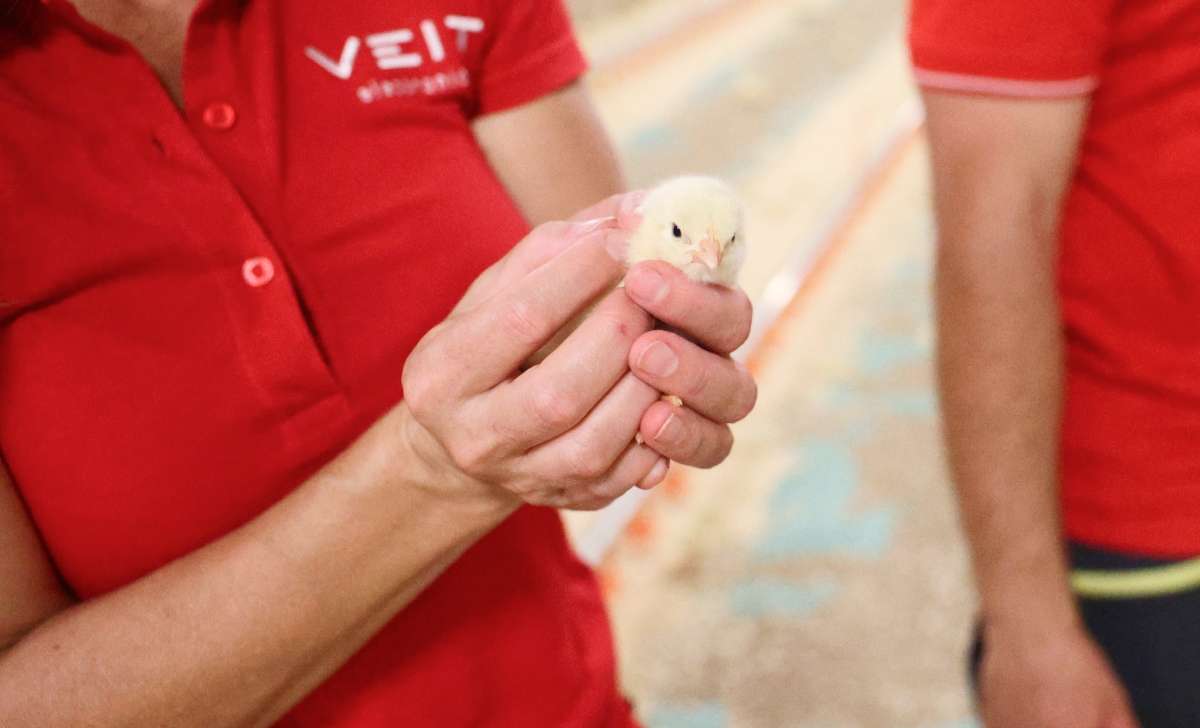
Cold weather affects flock performance well before clinical signs appear. Understanding poultry thermoregulation is the foundation of every effective winter management decision.
How Chickens Regulate Body Temperature
Chickens are homeothermic, maintaining a core body temperature of around 41°C regardless of conditions outside. Their thermoneutral zone falls between approximately 18 and 24°C. Below this range, birds must redirect metabolic energy toward generating body heat, diverting it away from growth or egg production (Kim et al., 2023).
Laying hens below 18°C show measurable performance declines, due to energy that would normally go to performance being used to generate more body heat (Kim et al., 2023). In broilers, cold stress affects triiodothyronine levels, haematocrit, and feed conversion efficiency (Blahová et al., 2007). These physiological shifts begin before weight loss is visible.
How to Keep Your Chickens Warm in Winter: Housing and Insulation
Insulated walls and roof reduce radiant heat loss and limit cold air infiltration. Collective body heat also contributes to house temperature at commercial densities (Cobb Vantress, 2021), making stocking uniformity a relevant factor during cold periods.
A sound environmental control system is the most effective tool for protecting productivity in commercial poultry housing (Garcimartín et al., 2007). Heaters must match house volume and stay clear of air inlets (Cobb Vantress, 2021).
Ventilation Without Sacrificing Heat
Minimum ventilation must be maintained even in the coldest months. Moisture from respiration and litter decomposition accumulates rapidly in sealed houses, driving ammonia levels upward (Cobb Vantress, 2021).
Combined cold and elevated ammonia suppress immunity and impair reproductive performance in laying hens (Li et al., 2025). Timed fan cycles manage moisture without sustained heat loss. Incoming air should be directed along the ceiling to mix with warm air before it reaches birds (Cobb Vantress, 2021).
Best Ways to Keep Your Chickens Warm: Feed and Litter
Below the thermoneutral zone, maintenance energy requirements increase. Adjusting dietary energy density upward offsets thermogenic demand and reduces the risk of weight loss and immunosuppression (NRC, 1994).
Dry, active litter insulates birds from cold ground contact through its thermal mass (Tabler and Wells, 2012). Wet or caked litter loses both insulation value and hygiene integrity (Tabler and Wells, 2012).
Hands-on weekly weight checks help confirm birds are maintaining condition as feed specifications change.
How to Keep Chickens Warm in Winter Without Electricity
For small-scale producers, passive strategies can reduce or eliminate reliance on electric heating: deep or built-up litter for floor-level insulation (Tabler and Wells, 2012), south-facing orientation for solar gain (Shah and McGuffey, 2008), and windbreaks to cut convective heat loss.
These same measures also benefit commercial farms. Windbreaks can reduce heating bills by 10 to 40 percent (Malone and Abbott-Donnelly; Tabler). Built-up dry litter reduces floor-level heating demand (Tabler and Wells, 2012) and provides a thermal buffer if heating systems fail.
Monitoring Weight to Detect Cold Stress Early
A plateau in live weight often signals birds diverting energy toward thermoregulation rather than production. Consistent weighing makes this visible early, before it becomes a welfare or yield problem.
Continuous live weight monitoring tracks daily trends across the whole flock without disturbing the birds.
The BAT2 Connect automatic poultry scale generates this data passively throughout the day, providing the stable daily baseline that seasonal performance comparisons require.
The BAT1 manual poultry scale supports targeted individual assessments, letting handlers check weight alongside fleshing scores, body condition, and respiratory signs during cold-period inspections.
Tracking weight trends across houses and seasons helps identify whether a winter performance gap is structural or management-related, informing decisions for future cycles.
References
1.) Blahová, J., Dobšíková, R., Straková, E. and Suchý, P. (2007). Effect of Low Environmental Temperature on Performance and Blood System in Broiler Chickens (Gallus domesticus). Acta Veterinaria Brno, 76, S17–S23. https://www.researchgate.net/publication/239278491
2.) Cobb Vantress (2021). Cobb Broiler Management Guide. Cobb-Vantress Inc. https://www.cobb-vantress.com/globalassets/cobb-files/management-guides/cobb-broiler-management-guide.pdf
3.) Garcimartín, M.A., Ovejero, I., Sánchez, E. and Sánchez-Girón, V. (2007). Application of the sensible heat balance to determine the temperature tolerance of commercial poultry housing. World’s Poultry Science Journal, 63(4), 575–584. https://doi.org/10.1017/S0043933907001626
4.) Kim, D.H., Song, J.Y., Park, J., Kwon, B.Y. and Lee, K.W. (2023). The effect of low temperature on laying performance and physiological stress responses in laying hens. Animals, 13(24), 3824. https://doi.org/10.3390/ani13243824
5.) Li, D., Li, F., Liu, W., Han, H., Wang, J. and Hao, D. (2025). Physiological responses of laying hens to chronic cold stress and ammonia exposure: implications for environmental management and poultry welfare. Animals, 15(12), 1769. https://doi.org/10.3390/ani15121769
6.) Malone, G.W. and Abbott-Donnelly, D. The benefits of planting trees around poultry farms. University of Delaware. The Poultry Site. https://www.thepoultrysite.com/articles/the-benefits-of-planting-trees-around-poultry-farms
7.) National Research Council (NRC) (1994). Nutrient Requirements of Poultry: Ninth Revised Edition. Washington, DC: The National Academies Press. https://doi.org/10.17226/2114
8.) Shah, S. and McGuffey, B. (c. 2008). Reducing energy use with solar transpired walls in poultry houses. North Carolina State University / North Carolina Solar Center. https://www.thepoultrysite.com/articles/reducing-energy-use-with-solar-transpired-walls-in-poultry-houses
9.) Tabler, G.T. Windbreaks for poultry farms. University of Arkansas, Avian Advice. The Poultry Site. https://www.thepoultrysite.com/articles/windbreaks-for-poultry-farms
10.) Tabler, T. and Wells, J. (2012). Poultry Litter Management. Mississippi State University Extension Service, Publication No. 2738. https://extension.msstate.edu/publications/poultry-litter-management