
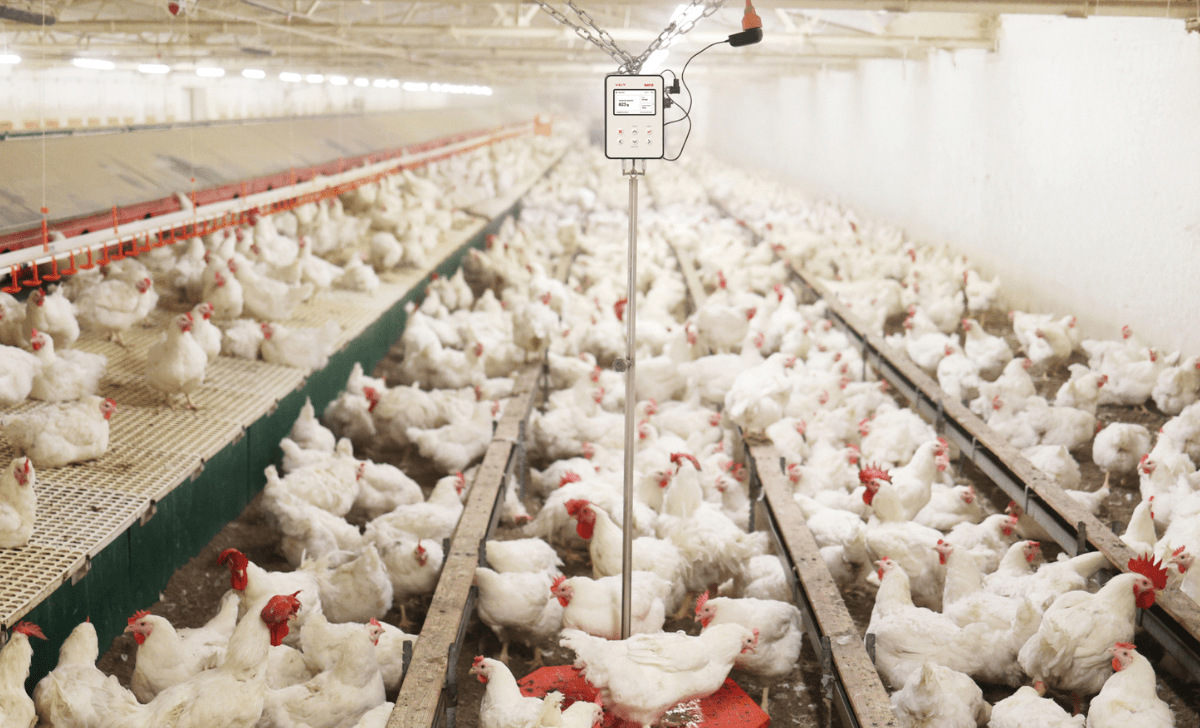
Stress-free poultry handling is critical for maintaining flock health, welfare, and productivity. Research shows that chronic stress significantly impairs growth performance, immune function, and overall bird welfare (Tellez-Isaias et al., 2023). Understanding proper chicken handling techniques helps farmers minimize stress while maintaining efficient operations.
The Impact of Stress on Poultry Performance
Chronic stress triggers physiological changes that suppress immunity and reduce feed intake (Gou et al., 2021). This leads to decreased body weight, impaired feed conversion, and increased disease susceptibility.
The duration of stress exposure matters enormously. While acute stress causes minimal impact, extended stress periods damage intestinal integrity and compromise the immune system (Yang et al., 2011). These effects translate directly into economic losses through reduced performance and increased mortality.
Gentle Chicken Catching Methods
Proper catching techniques greatly contribute to reducing stress during poultry handling. Studies demonstrate that pleasant human contact significantly reduces fear and stress responses in broilers compared to unpleasant or neutral interactions (Zulkifli & Azah, 2004). Birds exposed to regular positive visual human contact show lower stress reactions during handling than those without this exposure (Türkyılmaz et al., 2010).
When catching birds, move slowly and deliberately. The proper way to hold chickens involves supporting the body weight while controlling the wings to prevent injury. Never catch or carry birds by their legs. Weighing birds by their legs is perfectly fine, but research confirms that the quality of human contact matters as much as frequency, with pleasant interactions improving both performance and stress resilience (Zulkifli & Azah, 2004).
Weight Monitoring for Early Stress Detection
Stress-reduction strategies rely on identifying stress factors before they become chronic problems, ideally with as little human interaction as possible. The BAT2 Connect automatic poultry scale enables farmers to track growth patterns without repeatedly disturbing the flock.
Regular weight monitoring reveals stress indicators such as growth deviations and uniformity problems. When integrated with BAT Cloud data management, farmers can detect cold spots, hot spots, ventilation issues, and disease outbreaks before clinical signs appear.
Best Practices for Minimizing Weighing-Related Stress
While weighing provides essential performance data, the process introduces human presence that can stress birds. Implementing these stress-free poultry catching techniques reduces the impact:
– Acclimate birds to human presence early: Expose chickens to regular pleasant visual interactions with humans without physical contact. This positive familiarization significantly reduces fear responses when handling becomes necessary (Zulkifli & Azah, 2004; Türkyılmaz et al., 2010).
– Deploy automatic weighing systems: The BAT2 Connect automatic poultry scale eliminates frequent manual capture by continuously collecting weight data without human intervention.
– Minimize manual weighing duration: Studies have shown that while the act of weighing a bird does not impact growth performance, prolonged human presence can (Zulkifli & Azah, 2004; Türkyılmaz et al., 2010). To mitigate this effect, use specialized scales like the BAT1 manual poultry scale, which now weighs birds 43% faster, thanks to a recent FREE firmware update [LINK TO WEBSITE].
– Train all handling personnel: Ensure everyone understands gentle chicken catching methods and proper restraint techniques to create pleasant rather than unpleasant contact experiences.
Managing On-Farm Stress Factors
Heat stress represents a significant environmental challenge. When temperatures exceed the thermoneutral zone, chickens experience reduced feed intake and decreased body weight gain (Sesay, 2022). Weight data helps identify temperature-related stress patterns.
Disease pressure creates substantial stress loads. Immune challenges from coccidiosis, necrotic enteritis, or respiratory infections divert energy from growth to immune responses (Tellez-Isaias et al., 2023). Regular monitoring using the BAT1 manual poultry scale helps detect performance dips that signal emerging health problems.
How to handle chickens without stress requires understanding that stress prevention outweighs stress treatment. Proactive monitoring through low-stress livestock management practices, gentle handling, and environmental optimization protect both bird welfare and farm profitability.
References
Gou, Z., Abouelezz, K.F.M., Fan, Q., Li, L., Lin, X., Wang, Y., Cui, X., Ye, J., Masoud, M.A., Jiang, S., & Ma, X. (2020). Physiological effects of transport duration on stress biomarkers and meat quality of medium-growing Yellow broiler chickens. Animal, 15(1), 100079. https://doi.org/10.1016/j.animal.2020.100079
Sesay, A.R. (2022). Impact of heat stress on chicken performance, welfare, and probable mitigation strategies. International Journal of Environment and Climate Change, 12(11), 3120-3133. https://doi.org/10.9734/IJECC/2022/v12i111360
Tellez-Isaias, G., Eisenreich, W., Petrone-Garcia, V.M., Hernandez-Velasco, X., Castellanos-Huerta, I., Tellez, G. Jr., Latorre, J.D., Bottje, W.G., Señas-Cuesta, R., Coles, M.E., Hargis, B.M., El-Ashram, S., Graham, B.D., & Shehata, A.A. (2023). Effects of chronic stress and intestinal inflammation on commercial poultry health and performance: A review. German Journal of Veterinary Research, 3(1), 38-57. https://doi.org/10.51585/gjvr.2023.1.0051
Türkyılmaz, M.K., Nazlıgül, A., Balkaya, M., & Dereli, E.F. (2010). Effect of human factor on fear and stress reactions and some performance parameters in broiler chickens. International Journal of Poultry Science, 9(1), 59-62. https://doi.org/10.3923/ijps.2010.59.62
Yang, X.J., Li, W.L., Feng, Y., & Yao, J.H. (2011). Effects of immune stress on growth performance, immunity, and cecal microflora in chickens. Poultry Science, 90(12), 2740-2746. https://doi.org/10.3382/ps.2011-01591
Zulkifli, I., & Azah, A.S.N. (2004). Fear and stress reactions, and the performance of commercial broiler chickens subjected to regular pleasant and unpleasant contacts with human being. Applied Animal Behaviour Science, 88(1-2), 77-87. https://doi.org/10.1016/j.applanim.2004.02.014