
Modern poultry producers increasingly seek natural poultry supplements to enhance flock health without relying solely on synthetic interventions. While essential minerals for chicken nutrition remain adequately balanced in commercial feed formulations, herbal chicken feed additives offer powerful benefits for immune function, gut health, and overall performance.
Natural herbs for chicken health have gained scientific validation in recent years. Oregano stands as one of the most researched herbal feed additives for chickens, containing 80-85% carvacrol and thymol, compounds with potent antimicrobial properties (Zaazaa et al., 2024). Research demonstrates that oregano supplementation at 300 mg/kg improves growth performance and intestinal integrity in broilers under stress conditions (Zaazaa et al., 2024). Thyme provides similar benefits, supporting respiratory health and reducing intestinal parasite loads through its natural antiparasitic compounds (Biopoint, 2024).
Garlic represents another valuable natural chicken health booster, offering antibacterial and antiparasitic properties that support digestive function and immune response. Studies confirm that essential oils from thyme, oregano, and garlic effectively inhibit Eimeria tenella development, the causative agent of coccidiosis (PMC, 2024). These organic poultry supplements work synergistically when combined in feed formulations.
Probiotics for chickens constitute a critical category of natural poultry health supplements. Multi-strain formulations containing Lactobacillus, Bifidobacterium, and Bacillus species modify intestinal microbiota, stimulate immune function, and prevent pathogen colonization (Khan et al., 2020). Research shows that probiotic supplementation during the first week of life significantly increases beneficial bacteria while reducing pathogenic species like Escherichia coli and Clostridium (Khan et al., 2020). Early administration creates lasting positive effects on gut microbiome composition and broiler performance.
Prebiotics enhance probiotic efficacy by nourishing beneficial bacteria. Mannan oligosaccharides and beta-glucans from yeast cell walls increase Lactobacillus and Bifidobacterium populations while reducing Salmonella and Clostridium perfringens (Teng and Kim, 2018). Fermentation produces short-chain fatty acids that fuel epithelial growth and strengthen gut barriers. Supplementation at 0.2% improves villus height, goblet cell density, and mucin production, creating physical barriers against pathogens (Teng and Kim, 2018).
Diatomaceous earth for poultry offers dual benefits for internal and external parasite control. When supplemented at 2% of feed weight, diatomaceous earth significantly reduces Capillaria and Heterakis infections while improving body weight, egg production, and egg quality in organic laying hens (Bennett et al., 2011). The fine silica particles work mechanically to control external parasites like mites and lice through desiccation.
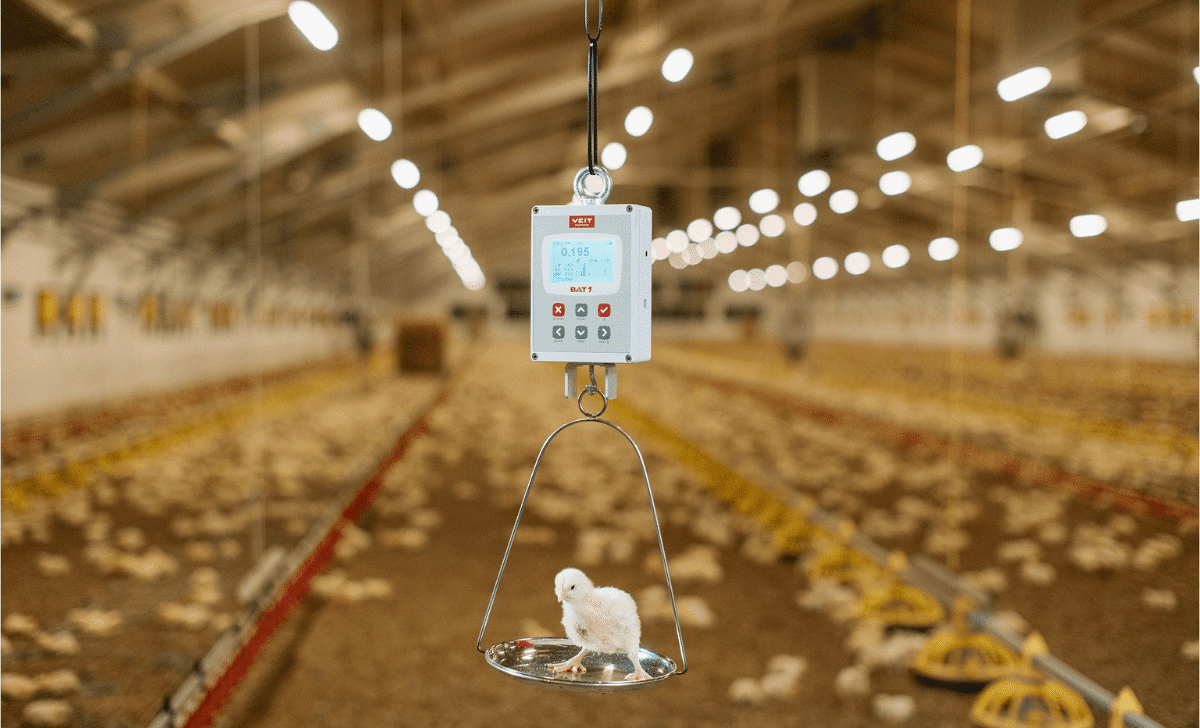
Precision monitoring tools like the BAT2 Connect automatic poultry scale and BAT1 manual poultry scale enable producers to track weight gain and flock uniformity when implementing natural poultry supplements. The BAT Cloud platform provides data analytics showing how herbal additives influence growth curves. This feedback helps optimize supplementation rates for natural poultry health supplements.
Integrating botanical feed additives requires careful formulation and consistent monitoring. Success depends on selecting quality ingredients, maintaining proper inclusion rates, and evaluating results through systematic data collection. While poultry mineral supplements remain stable in commercial feeds, herbal and probiotic additions offer flexible, natural pathways to enhanced flock health and productivity.
References
Bennett, D.C., Yee, A., Rhee, Y.J., and Cheng, K.M. (2011). Effect of diatomaceous earth on parasite load, egg production, and egg quality of free-range organic laying hens. Poultry Science, 90(7), 1416-1426. https://www.sciencedirect.com/science/article/pii/S0032579119420300
Biopoint. (2024). How to boost poultry immunity with supplements: Benefits of natural herbs like astragalus and thyme. https://biopoint.eu/blog/info/how-to-boost-poultry-immunity-with-supplements-benefits-of-natural-herbs-like-astragalus-and-thyme/
Khan, S., Moore, R.J., Stanley, D., and Chousalkar, K.K. (2020). Probiotics (direct-fed microbials) in poultry nutrition and their effects on nutrient utilization, growth and laying performance, and gut health: A systematic review. Animals, 10(10), 1863. https://www.mdpi.com/2076-2615/10/10/1863
PMC. (2024). Thyme, oregano, and garlic essential oils and their main active compounds influence Eimeria tenella intracellular development. National Center for Biotechnology Information. https://pmc.ncbi.nlm.nih.gov/articles/PMC10778106/
Teng, P.Y., and Kim, W.K. (2018). Review: Roles of prebiotics in intestinal ecosystem of broilers. Frontiers in Veterinary Science, 5, 245. https://pmc.ncbi.nlm.nih.gov/articles/PMC6218609/
Zaazaa, A., et al. (2024). Oregano essential oil and Bacillus subtilis role in enhancing broiler’s growth, stress indicators, intestinal integrity, and gene expression under high stocking density. Scientific Reports, 14, 24548. https://www.nature.com/articles/s41598-024-75533-8