
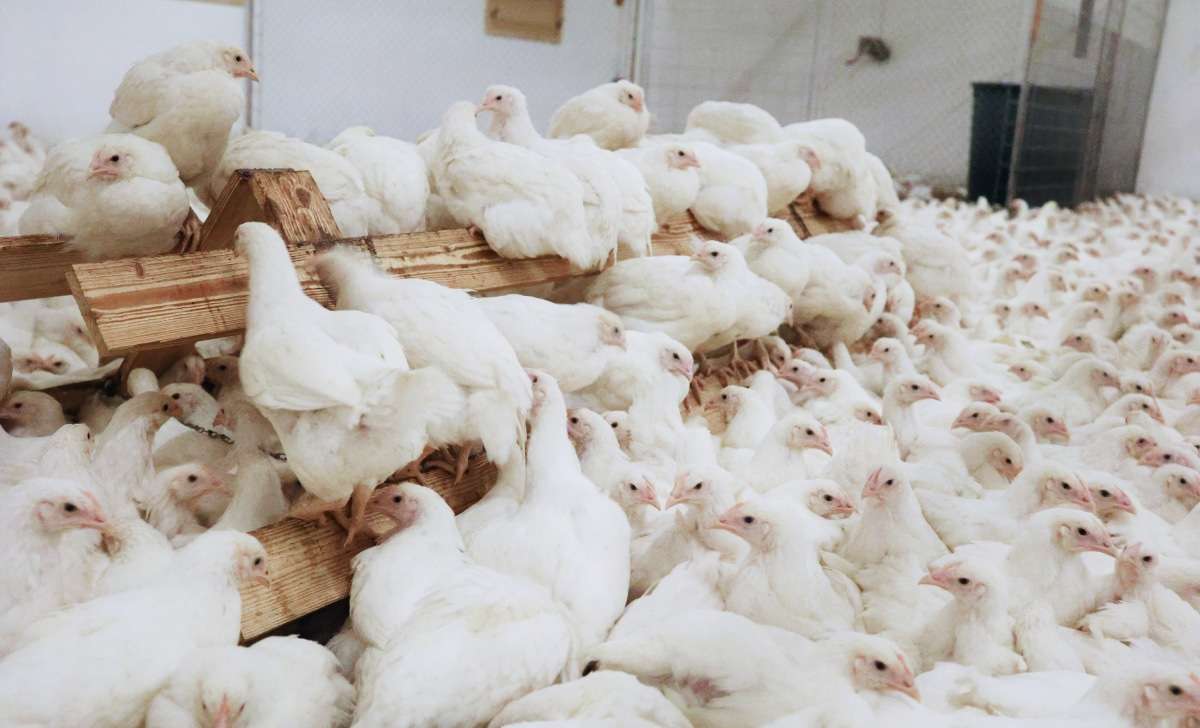
Avian influenza in chickens is one of the most economically destructive bird diseases in global poultry production. Since 2022, over 96 million birds have been lost to Highly Pathogenic Avian Influenza (HPAI) outbreaks in the United States alone (USDA-APHIS, 2024). Recognising clinical signs quickly is critical, as mandatory culling requirements leave no room for delay.
How Do Chickens Get Bird Flu?
Bird flu in chickens is caused by type A influenza viruses. Wild waterfowl are the primary reservoir, introducing the virus to commercial and backyard flocks through direct contact and contaminated water sources (Alexander, 2000). Contaminated equipment and vehicles can carry the virus between premises without any visible warning. Highly pathogenic avian influenza (HPAI) strains, including H5N1 bird flu, survive well in moist environments, making litter and poorly disinfected surfaces significant risk factors (Swayne & Suarez, 2000).
What Does Bird Flu Look Like in Chickens?
Symptoms of bird flu in chickens vary by pathotype. Low pathogenic strains produce only mild signs, while HPAI strains can kill more than 90 percent of a flock within 48 hours (Alexander, 2000; Swayne & Suarez, 2000).
Avian influenza symptoms in chickens caused by HPAI include ruffled feathers, lethargy, labored breathing, cyanosis of the comb and wattles, facial swelling, watery diarrhea, and neurological signs such as head tremors. Bird flu signs in chickens can develop within hours, and any sudden unexplained mortality must be treated as a potential HPAI incident until laboratory confirmation is obtained.
How to Test for Bird Flu in Chickens
Bird flu symptoms in chickens cannot confirm a diagnosis. Laboratory testing at an accredited veterinary facility is required for definitive identification.
Oropharyngeal and cloacal swabs alongside fresh tissue from deceased birds are standard sample types (WOAH, 2023). Real-time reverse transcriptase PCR (rRT-PCR) targeting the influenza A matrix gene is the preferred rapid detection method (Spackman et al., 2002), with virus isolation and sequencing used to confirm pathotype and subtype. How do you know if your chickens have bird flu before results arrive? Sudden mortality, respiratory distress, and production loss warrant immediate contact with your national veterinary authority and full farm isolation.
How to Prevent Bird Flu in Chickens
Biosecurity is the primary defense for commercial operations and backyard chickens and bird flu risk alike. Core measures include controlled farm access, dedicated footwear per unit, regular vehicle disinfection and all-in, all-out management (Cobb-Vantress, 2020). Surface water sources that attract wild waterfowl should never supply poultry drinking water.
A bird flu vaccine for chickens is used in several countries as part of a broader control strategy. Vaccination does not replace biosecurity and is typically deployed alongside movement restrictions and enhanced surveillance (FAO, 2023). Regulatory approval varies by country and must be confirmed with the relevant competent authority.
Bird Flu Treatment in Chickens
There is no licensed treatment for HPAI under commercial conditions. How to cure bird flu in chickens has no practical clinical answer: affected flocks are subject to mandatory culling under national and international disease control regulations (WOAH, 2023). In low pathogenic infections outside commercial settings, limited supportive care may be possible. Early notification of authorities gives the best chance of containing an outbreak.
Cited References
1.) Alexander, D.J. (2000). A review of avian influenza in different bird species. Veterinary Microbiology, 74(1–2), 3–13. https://doi.org/10.1016/s0378-1135(00)00160-7
2.) Cobb-Vantress. (2020). Cobb Breeder Management Guide. Cobb-Vantress Inc. https://www.cobb-vantress.com
3.) FAO. (2023). Avian influenza. Food and Agriculture Organization of the United Nations. https://www.fao.org/avian-influenza/en/
4.) Spackman, E., Senne, D.A., Myers, T.J., Bulaga, L.L., Garber, L.P., Perdue, M.L., Lohman, K., Daum, L.T., & Suarez, D.L. (2002). Development of a real-time reverse transcriptase PCR assay for type A influenza virus and the avian H5 and H7 hemagglutinin subtypes. Journal of Clinical Microbiology, 40(9), 3256–3260. https://doi.org/10.1128/JCM.40.9.3256-3260.2002
5.) Swayne, D.E., & Suarez, D.L. (2000). Highly pathogenic avian influenza. Revue Scientifique et Technique de l’OIE, 19(2), 463–482. https://doi.org/10.20506/rst.19.2.1230
6.) USDA-APHIS. (2024). Confirmations of highly pathogenic avian influenza in commercial and backyard flocks. United States Department of Agriculture. https://www.aphis.usda.gov/livestock-poultry-disease/avian/avian-influenza/hpai-detections/commercial-backyard-flocks
7.) WOAH. (2023). Avian influenza (infection with avian influenza viruses). World Organisation for Animal Health. https://www.woah.org/en/disease/avian-influenza/