Of the forces that shape bodyweight variation in a flock, genetics, nutrition and the farm environment among them, management is the one farmers can adjust day to day (Choi et al., 2026). That matters because grading only starts the job. A flock can leave the grading pens more than 90 percent uniform, and three weeks later that figure is often back in the 70s. Genetics and feed rarely deserve the blame. The barn does, and most farmers never trace it back. For a commercial pullet flock, the sort holds only if lighting, feeder access, litter and air quality are managed after grading and weights are tracked on a schedule.
First grading at 7 to 14 days sets the schedule
Pullet rearing, for a broiler breeder flock or a layer operation, runs on grading. Every breeder guide treats it as standard practice: weighing and sorting birds by weight, and feeding each group back to target. It works because it removes feed competition between birds with very different needs.
Timing decides how much that first grading is worth. Cobb’s breeder guide calls for a full flock grading at 7 to 14 days old, with repeat gradings at 4, 8, and 12 weeks, and warns that delaying the first grading diminishes the advantage it buys. Flocks graded on that schedule can reach and hold uniformity above 80 percent. Flocks that wait lose that ceiling, and the gap they are trying to close only gets wider (Cobb-Vantress, 2020).
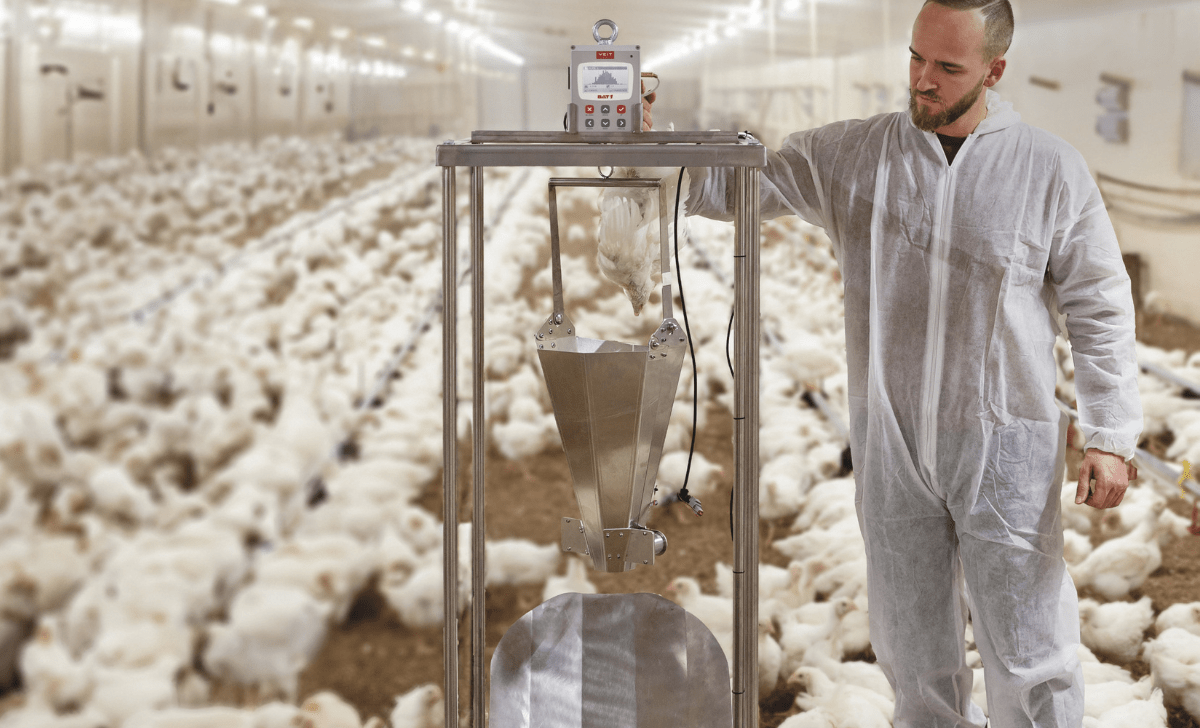
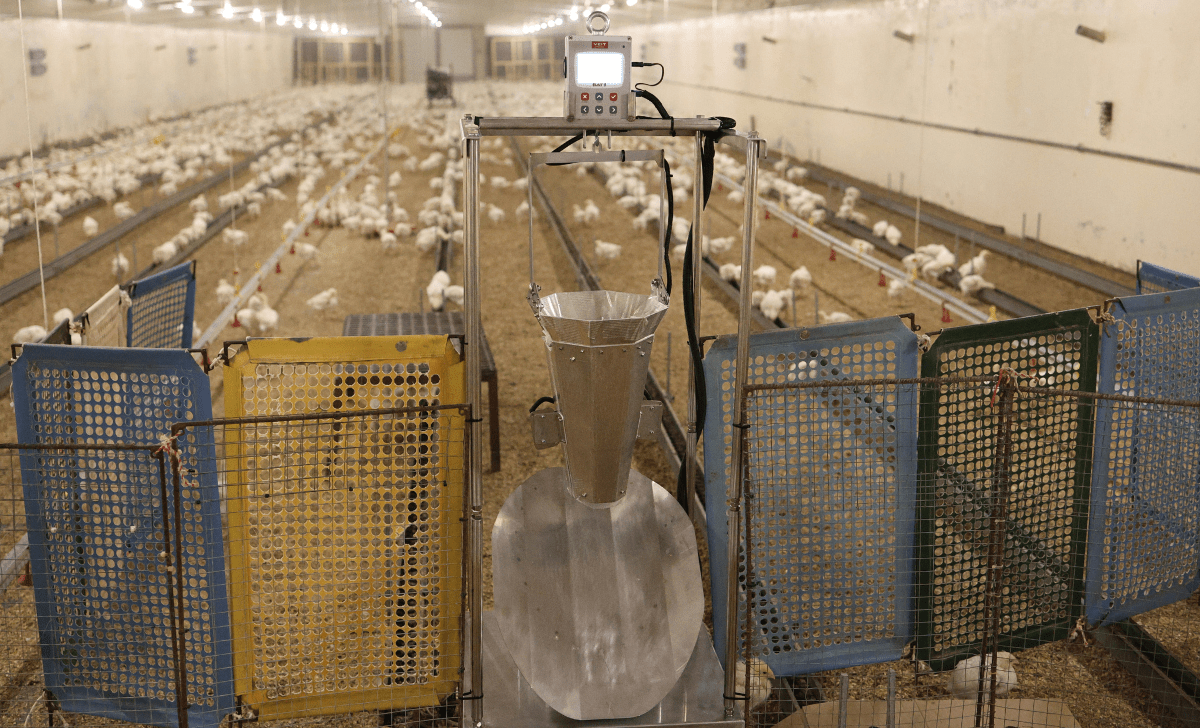
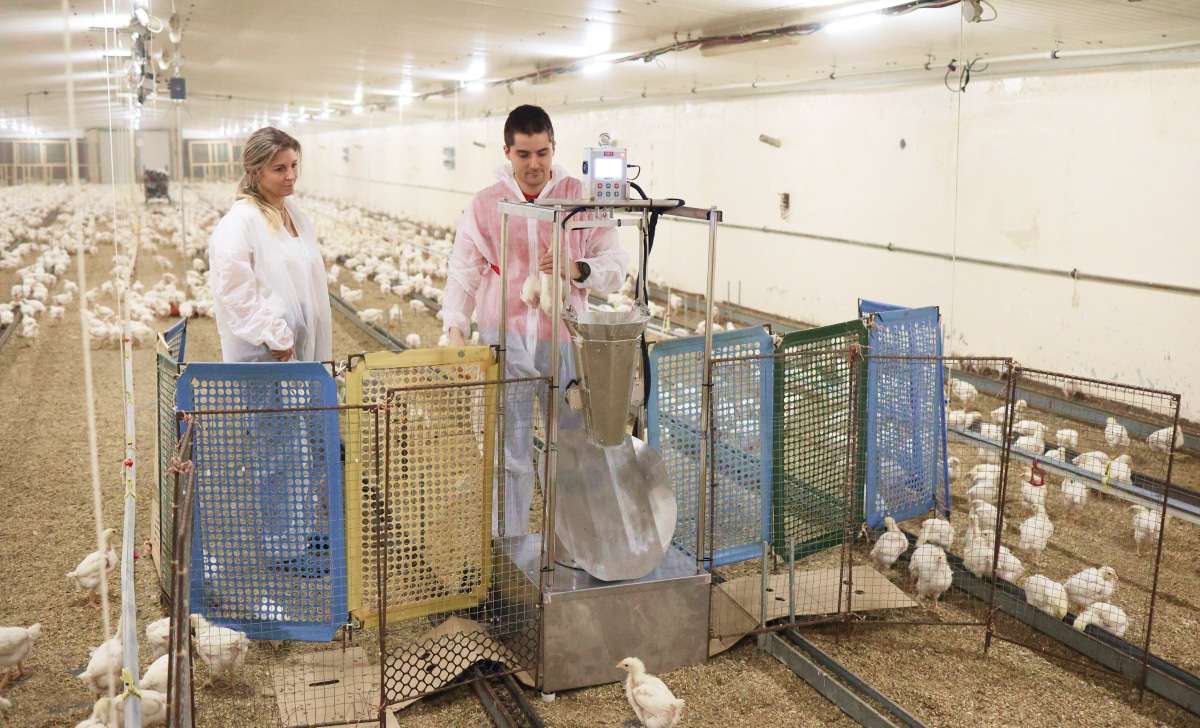
Labour often decides whether the schedule is kept, and automated sorting can cut that labour cost while supporting uniformity. The BAT1 Sorting Machine takes the job of hand sorting birds one by one in a dusty barn off a farmworker’s plate. With labour this hard to find, that can determine whether a grading protocol runs on time, at 7 to 14 days and every few weeks after, or keeps getting pushed back.
Lighting and feeder access shape feeding behaviour
Lighting is a common failure point. Uneven light distribution creates pockets of different feeding behaviour, and longer rearing light periods slow growth and lower uniformity (Choi et al., 2026). Rearing light regimens also shape how fully the ovary and oviduct develop by sexual maturity, and getting that window wrong at either extreme restricts reproductive development (Chen et al., 2007). Timing light stimulation to body weight and uniformity, rather than to age alone, is how producers manage that window in practice.
Feeder and drinker access matters too. Differences in height and distribution change how birds eat and drink, and feed restriction built around feeder access is a documented driver of uniformity in breeder flocks (Choi et al., 2026). Getting the feed amount right immediately after grading, calculated for each group by bird numbers and target weight, matters just as much as access (Cobb-Vantress, 2020).
Litter and air quality create uneven microclimates
Air quality and litter condition reinforce each other. Poor litter raises moisture and ammonia in the air, and poor ventilation keeps litter from drying. The uneven microclimates and pathogen exposure that result leave birds responding differently depending on where they stand in the house (Choi et al., 2026).
Weekly weights show whether the grading is holding
A gap left to widen carries a cost that shows up later than most farmers expect. A 2025 study followed Hyline Brown pullets that were about 25 percent lighter than their flock average at the end of brooding. Their weight gap narrowed by 20 weeks, so a farmer checking a single later weight might have called it solved. It was not. These hens reached point of lay 6 days later and reached 5 percent production 11 days later. They were also far less likely to achieve strong laying persistency across the full laying cycle. Just 69.5 percent reached 250 eggs, against 87.4 percent of normal weight hens (Lu et al., 2025). Catching up on weight is not the same as catching up on productivity. The case demonstrated in the study is an extreme one that is unlikely to happen on a well-run modern farm, but it does underline just how severe the consequences of poor management during rearing can be.
Grading and ongoing weight tracking have to work together, starting with that first weighing in the first two weeks of life. Between gradings, a BAT1 manual scale keeps a farm on top of weekly weights on its own, or paired with a BAT2 Connect automatic scale for continuous tracking.
Feeding that data into BAT Cloud lets a farm compare this flock against last year’s weight records, so a lighting or ventilation gap that quietly costs uniformity every summer stops looking like bad luck.
References
- Chen, H., Huang, R. L., Zhang, H. X., Di, K. Q., Pan, D., & Hou, Y. G. (2007). Effects of photoperiod on ovarian morphology and carcass traits at sexual maturity in pullets. Poultry Science, 86(5), 917–920. https://doi.org/10.1093/ps/86.5.917
- Choi, J., Goo, D., Ko, H., Lee, J., & Kim, W. K. (2026). Factors affecting flock uniformity in broiler production: individual, environmental, and management characteristics. Animals, 16(2), 185. https://www.ncbi.nlm.nih.gov/pmc/articles/PMC12837223/
- Cobb-Vantress, Inc. (2020). Cobb Breeder Management Guide. Cobb-Vantress. (Grading chapter excerpt.) https://www.thepoultrysite.com/articles/cobb-breeder-management-guide-methods-for-grading-breeders
- Lu, J., Wang, Q., Ma, M., Li, Y., Guo, W., Zhang, X., Yang, X., & Qu, L. (2025). Influence of body weight at the end of the brooding period on the productive performance in Hyline Brown laying hens from 6 to 72 weeks of age. Animals, 15(9), 1292. https://www.mdpi.com/2076-2615/15/9/1292