
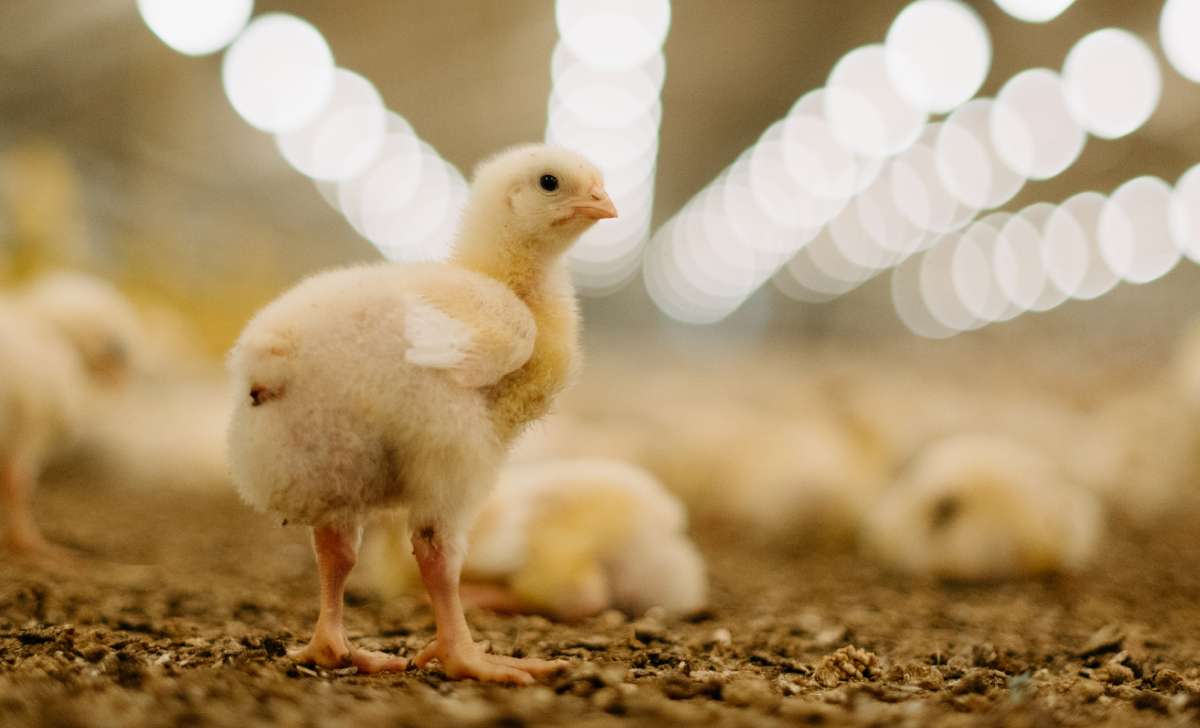
Splayed leg is one of the most common reasons a newly hatched chick can’t stand. A splayed leg chick has one or both legs sliding out to the side instead of positioned under its body, which keeps it from reaching feed or water. Most small-flock cases are correctable within days. Commercial hatcheries handle the same condition differently, folding it into formal chick-quality and welfare protocols rather than treating each bird individually.
What Causes Chick Splayed Leg?
The most common trigger is a hatching or brooding surface that’s too smooth, letting a chick’s weak legs slide out to the side before muscle tone develops (PoultryDVM, 2026). Newspaper and other smooth linings are frequent culprits; textured surfaces cut the risk substantially.
Incubation problems add to the risk. Eggs stored too long before setting, or hatched under inconsistent temperature and humidity, produce more weak and crippled chicks (Virginia Cooperative Extension, 2023). Nutrition plays a role too: chick splayed leg can stem from riboflavin or manganese deficiencies in the breeder flock’s diet, which also causes curly toe paralysis and chicks going down on their hocks. In advanced deficiency, affected birds may lie with legs extended in opposite directions (Merck Veterinary Manual, 2024).
Splayed Leg Chick Treatment and Prevention
In a backyard or small-flock setting, most cases are correctable within days. A chick with splayed leg needs prompt, gentle handling: bring the legs under the body to a natural standing width, then loosely secure them with a soft hobble made from vet wrap, a fabric bandage, or a cut adhesive bandage, leaving enough space that the chick can still take steps (PoultryDVM, 2026). If a hobble alone doesn’t correct the position within a day or two, a firmer splayed leg chick splint, such as a foam block grooved to hold each leg in place, usually does the job (PoultryDVM, 2026). Keep the chick separate from hatch mates, and check the hobble or splint daily, adjusting it as the chick grows so circulation isn’t restricted.
Commercial hatcheries don’t treat splayed leg as a one-off welfare issue; they build it into formal day-old chick quality checks that run at scale. Grading systems such as the Tona and Pasgar scores rate chicks on a set of physical criteria, including leg condition, alongside navel closure, yolk sac absorption, and vitality, to predict how well a batch will perform after hatch (Tona et al., 2004). Chicks flagged for abnormal leg positioning at grading are pulled from marketable stock, since leg defects at this stage tend to track with lower viability and uneven early growth.
Splinting each bird individually isn’t practical at hatchery volumes, so welfare guidelines followed by integrated broiler producers direct staff to remove and humanely euthanize chicks unlikely to thrive, including those with uncorrectable leg defects, before they leave the hatchery (National Chicken Council, 2003). The same logic carries into later-stage leg health: producers use standardized gait-scoring systems to guide humane end-of-life decisions at the flock level instead of treating birds one at a time.
beats correction in either setting: textured incubator and brooder flooring, stable incubation temperature and humidity, eggs set within the recommended storage window, and a properly formulated breeder diet rather than a standard layer ration, which can fall short on the nutrients chick skeletal development needs (Virginia Cooperative Extension, 2023).
Prevention carries more weight commercially than in a backyard flock, since grading and culling only sort birds already affected rather than reduce how many are affected. Commercial hatcheries hold incubator and hatcher temperature and humidity within range using calibrated, monitored systems, and line hatcher baskets with textured material to cut slippage in the first hours after hatch. Breeder diets follow published, research-based formulations rather than informal adjustment (National Chicken Council, 2003). That combination, not correction after the fact, is what lowers impact at scale.
Splayed Leg Chick Recovery Time
Most splayed leg chick recovery time in backyard settings runs twenty-four to seventy-two hours once a hobble is in place, provided treatment starts early (PoultryDVM, 2026). A splayed leg chick fix applied within the first day works much better than any chick splayed leg fix attempted later, since tendons gradually adapt to the abnormal position the longer it’s left uncorrected.
Chick With One Splayed Leg: Does It Change Treatment?
A chick with one splayed leg is treated the same way as a chick with both legs affected: the hobble holds the unaffected leg at the same width as the corrected one. Unilateral cases often resolve faster, since one leg is already tracking normally and just needs to stay in line with its partner.
In a small flock, correcting splayed leg means holding the legs in place until muscle and tendon strength catch up. Commercial operations manage the same condition differently, through day-old grading and welfare protocols rather than individual correction. Addressing the incubation, brooding, and breeder-nutrition factors behind it means fewer cases at the next hatch.
References
Merck Veterinary Manual (2024). Vitamin Deficiencies in Poultry. https://www.merckvetmanual.com/poultry/nutrition-and-management-poultry/vitamin-deficiencies-in-poultry
National Chicken Council (2003). Animal Welfare Guidelines and Audit Checklist. https://www.thepoultrysite.com/articles/animal-welfare-guidelines-and-audit-checklist
PoultryDVM (2026). Splay Leg in Chickens: Signs, Treatment and Prevention. https://poultrydvm.com/condition/splayed-leg
Tona, K., Onagbesan, O., De Ketelaere, B., Decuypere, E., and Bruggeman, V. (2004). Effects of Age of Broiler Breeders and Egg Storage on Egg Quality, Hatchability, Chick Quality, Chick Weight, and Chick Posthatch Growth to Forty-Two Days. Journal of Applied Poultry Research, 13(1), 10-18. https://www.sciencedirect.com/science/article/pii/S1056617119314060
Virginia Cooperative Extension (2023). Leg and Foot Disorders in Domestic Poultry. https://www.pubs.ext.vt.edu/APSC/apsc-193/apsc-193.html