
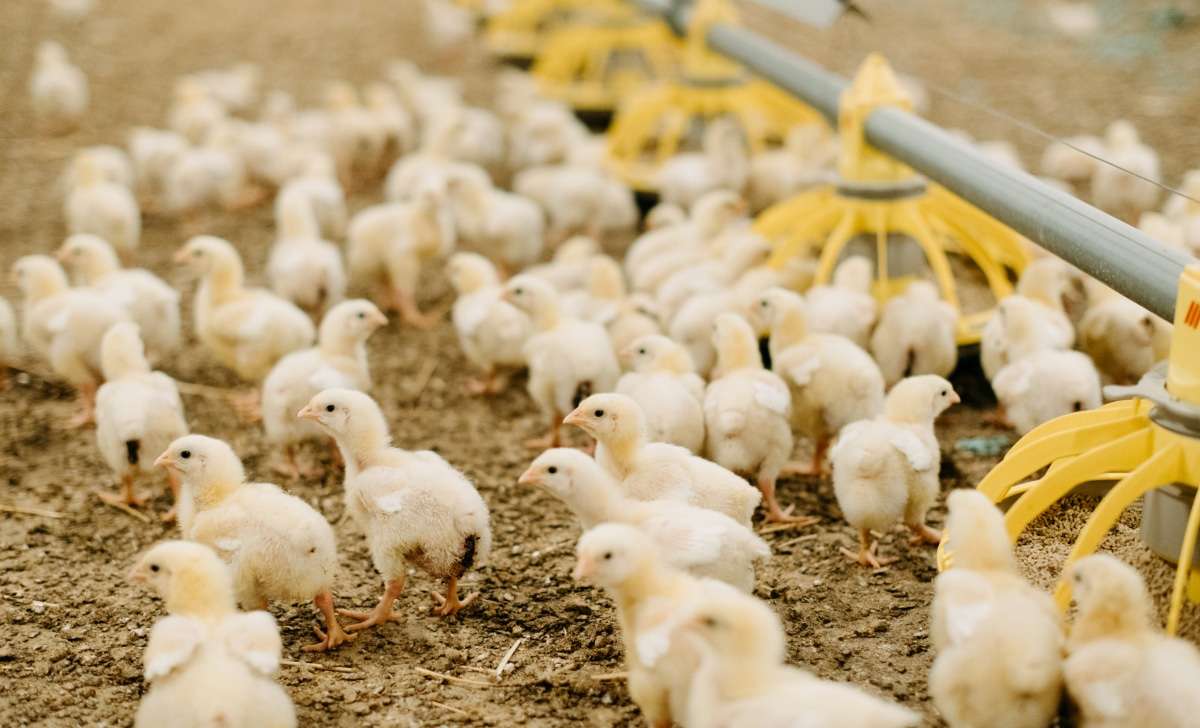
Gapeworm in chickens is a parasitic infection of the trachea caused by the nematode Syngamus trachea. Confinement housing with impervious concrete floors keeps commercial broiler and layer flocks off the soil this parasite needs, so the disease is essentially absent from classic enclosed halls (Merck Veterinary Manual, n.d.).
Free-range, pastured, game bird, and backyard flocks carry the real exposure, since birds there reach soil and earthworms directly. As free-range production grows, this once-marginal disease is gaining relevance for commercial producers. When gapeworm breaches a commercial system, its short life cycle and high mortality in young birds cause serious economic damage.
Gapeworm in Chickens‘ Throat: How the Parasite Takes Hold
Adult worms lodge in the trachea, where mated pairs form a distinctive Y shape (Merck Veterinary Manual, n.d.). Birds become infected by swallowing eggs or larvae directly.
More often in the field, infection comes from eating earthworms, snails, slugs, or flies carrying encysted larvae (Clapham, 1939). These transport hosts can keep larvae viable in soil for years, which is exactly why concrete floors interrupt the cycle so effectively (Westgate Labs, n.d.).
Why Weight and FCR Trail Behind a Real Outbreak
Recognizing gapeworm symptoms early matters more than waiting for feed data to move. Weight loss and a shift in feed conversion ratio are real consequences of a gapeworm outbreak, but they are lagging signals. By the time either one moves, the parasite has usually established itself and the clinical or economic blow has already landed.
Pairing routine weighing with a quick physical check closes that gap. Slow-growing broilers raised outdoors on pasture are a good example: routinely weighed, with pasture access that lets gapeworm in. Manual sessions on the BAT1 manual poultry scale give staff a natural moment to also watch for gaping, in which a bird stretches its neck and gasps for air (Girma et al., 2024). Add a positive fecal egg count or a tracheal worm sighting at necropsy, and management has a confirmed diagnosis well before FCR alone would show a trend.
Preventing Gapeworm: What the Evidence Actually Supports
No peer-reviewed evidence supports garlic, herbs, or diatomaceous earth against Syngamus trachea
. The interventions with real evidence behind them target the environment, not the bird’s diet.
Tilling pens between flocks, rotating pasture, and treating litter to reduce earthworm, snail, and slug populations all interrupt the life cycle before birds are exposed (Girma et al., 2024; PoultryDVM, n.d.).
Once an outbreak is confirmed, standard gapeworm treatment relies on veterinary anthelmintics such as fenbendazole, albendazole, or ivermectin, often repeated after one to two weeks to catch newly hatched larvae. Because dying worms can be aspirated and trigger fatal pneumonia, dosing should follow veterinary guidance rather than an improvised protocol (Westgate Labs, n.d.).
Turning Weight Data Into a Recovery Timeline
Once gaping, a fecal count, or a necropsy confirms the outbreak, feed conversion shifts from a diagnostic clue to a financial and operational tracking metric. It lets managers cost the outbreak, time the treatment window using data from the BAT2 Connect automatic scale, and measure how fast the flock recovers.
Continuous live weight monitoring flags a drop in average daily gain as soon as it appears. A second, hands-on weighing session confirms whether individual birds are regaining condition, not just the flock average.
Feeding those readings into the BAT Cloud data platform turns scattered numbers into a clear before-and-after recovery curve. Where an outbreak has left the flock uneven, grouping recovering birds by weight for targeted care can shorten the road back to target weight.
Gapeworm in chickens will likely stay a non-issue for most confinement operations. But where soil access exists, pairing early clinical recognition with disciplined weight tracking is what keeps a rare parasite from becoming a lasting setback.
References
Clapham, P. A. (1939). On flies as intermediate hosts of Syngamus trachea. Journal of Helminthology, 17(2), 61–64. https://doi.org/10.1017/S0022149X00031060
Girma, W., Rebuma, T., & Negasa, T. (2024). An overview of Syngamus trachea of poultry in Ethiopia. International Journal of Veterinary Science & Medical Diagnosis. https://www.pubtexto.com/journals/international-journal-of-veterinary-science-and-medical-diagnosis/fulltext/an-overview-of-syngamus-trachea-of-poultry-in-ethiopia
Merck Veterinary Manual. (n.d.). Helminthiasis in poultry. https://www.merckvetmanual.com/poultry/helminthiasis/helminthiasis-in-poultry
PoultryDVM. (n.d.). Gapeworm infection in chickens: Signs, treatment & prevention. https://poultrydvm.com/condition/gapeworms
Westgate Labs. (n.d.). Gapeworm (Syngamus trachea and Cyathostoma bronchialis). https://www.westgatelabs.co.uk/info-zone/parasites-affecting-poultry/gapeworm-syngamus-trachea-and-cyathostoma-bronchialis/