Two pullets raised on the same feed program can finish rearing at markedly different weights, and that gap often resurfaces months later as fewer eggs and lower fertility. Most farms never trace the shortfall back to where it started.
Uniform flocks outperform mixed flocks
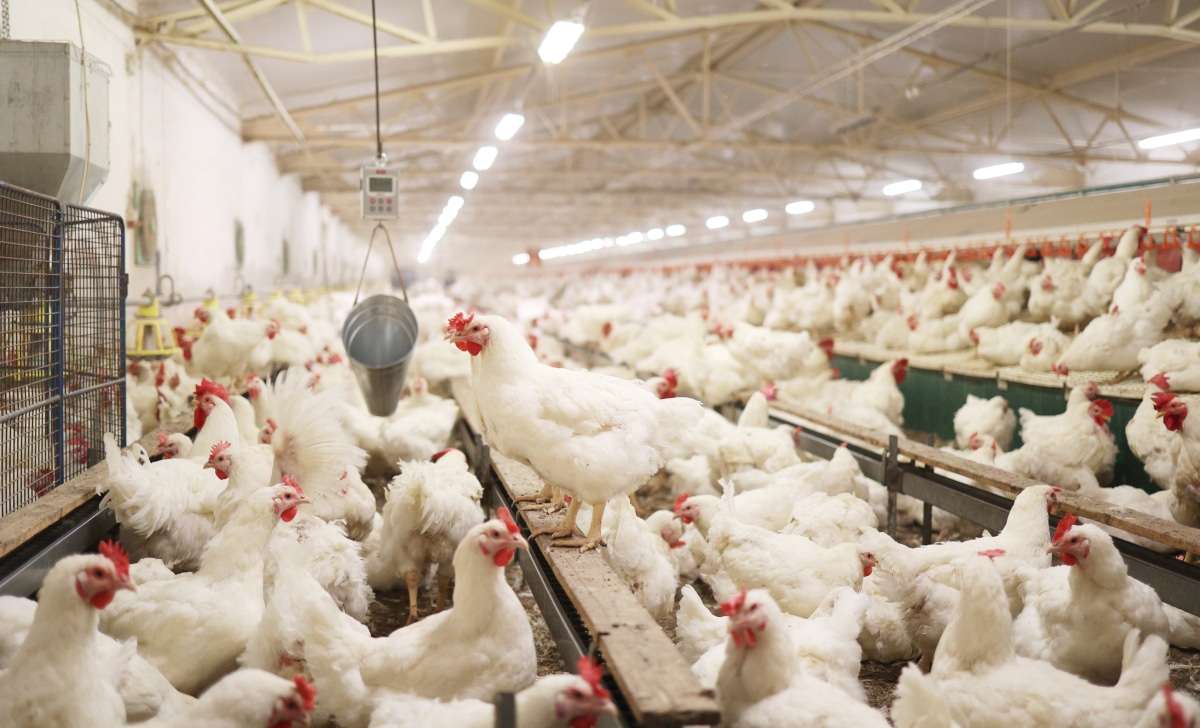
Modern broiler breeder pullets carry genetics very similar to fast-growing broilers, but reproductive success depends on hitting a much lower target weight than that growth potential would otherwise produce. Reaching that target requires heavy feed restriction, and a heavily restricted flock is never one uniform animal. It is hundreds of individual birds competing for a limited amount of feed.
Hudson et al. (2001) tested this directly. Over the roughly 12 weeks following the onset of lay, hens raised in a uniform flock produced 52.0 eggs each, even though the mixed comparison flocks started at the same average weight. Hens from flocks deliberately mixed with equal numbers of light and heavy birds produced as few as 46.8 eggs each over that same window. The spread inside a flock, not just its average weight, was enough on its own to cost real production.
What drives uneven feed intake
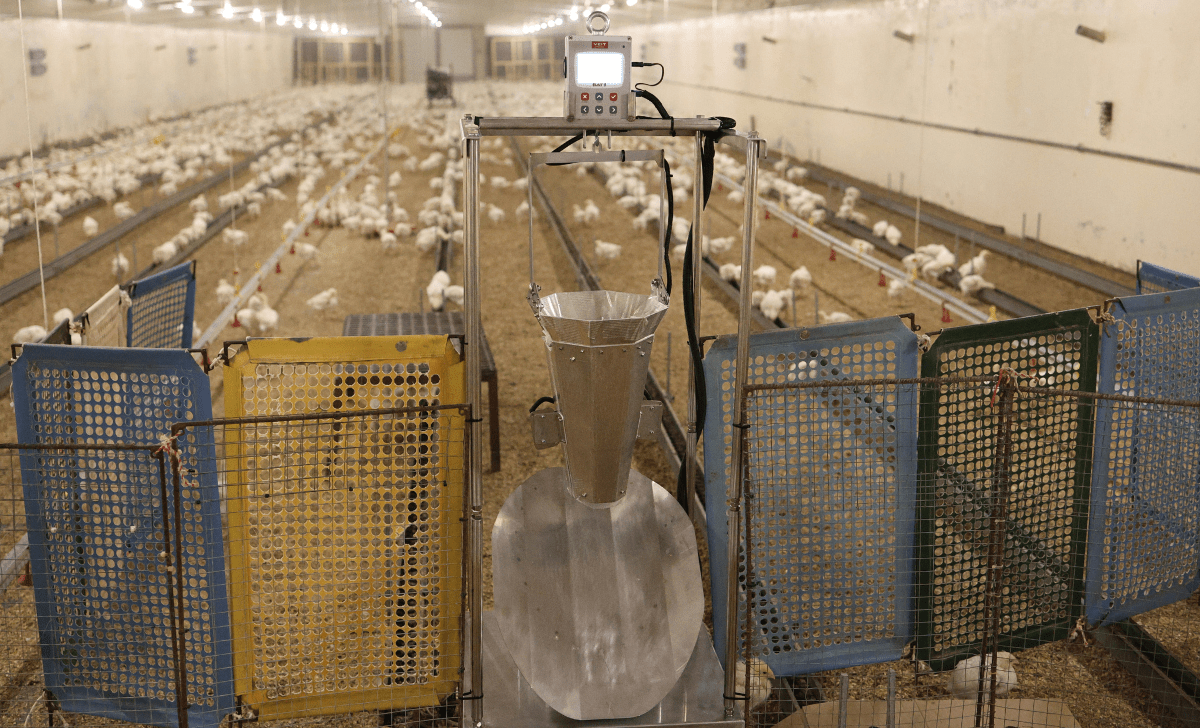
Zuidhof et al. (2017) traced the mechanism back to feeding itself. Several factors decide how evenly birds actually get fed: the nutrient density of the feed, the quantity provided, the frequency and timing of delivery, feeder design and feeder space per bird, stocking pressure, and how quickly feed can be spread through the house. Bigger, more assertive birds take more than their share regardless of these controls, while smaller birds take less. Restriction keeps getting tighter as genetics keep improving, so this competition problem does not resolve on its own. Spotting which birds are falling behind starts with reliable individual weight readings, whether collected on a BAT1 at routine checkpoints or tracked automatically between them.
That is why nutrition changes alone rarely fix uneven feed intake. A single ration cannot fit birds that already differ in weight. Birds need to be split into groups by weight first, so feed and management can match what each group actually needs.
Zuidhof et al. (2015) tested that approach directly, comparing five rearing strategies and measuring flock weight variation, expressed as the coefficient of variation (CV), at 22 weeks. Standard daily feeding produced a CV of 15.3%. A high fiber, diluted diet produced 15.2%. Skip-a-day feeding brought the figure down to 12.7%, and scatter feeding to 10.9%. Grading pullets into weight groups every four weeks produced the lowest variation by far, at 6.2%. Sorting won by a wide margin over every nutritional or scheduling change tested.
Comparing rearing strategies for uniformity
Breeder, pullet, and layer operations already know grading works. Every management guide says so. The real obstacle is doing it well. Manually catching, weighing, and grading birds one at a time in a dusty barn is slow, repetitive work, and tired hands make costly mistakes. A machine built specifically to automate that repetitive grading task, rather than relying on manual grading alone, removes much of that risk, and a centralized way to review weight trends across houses and flocks over time keeps the resulting numbers useful long after grading day.
Turning grading data into flock management decisions
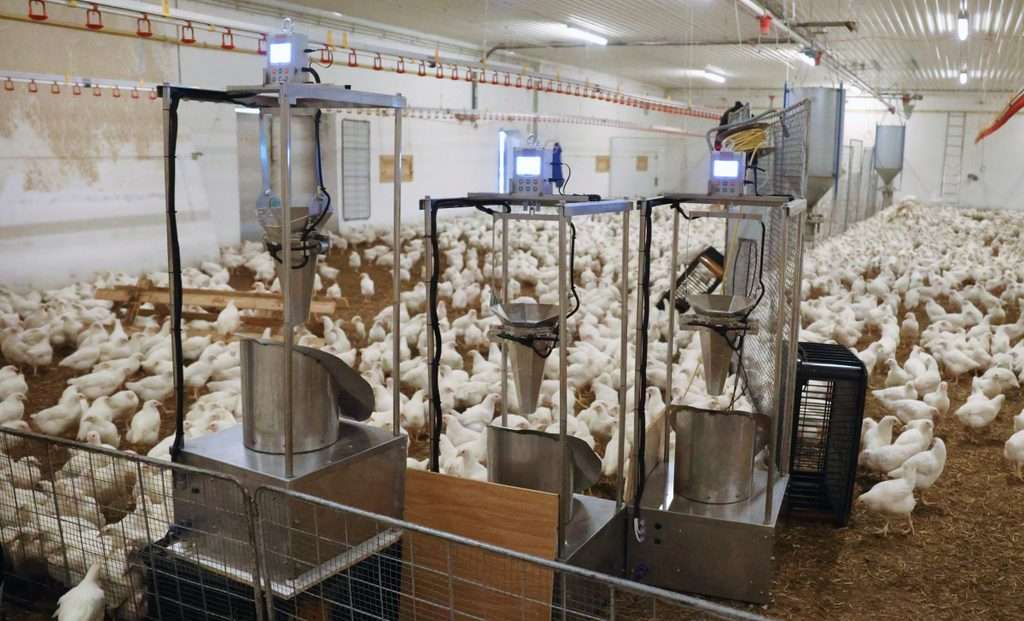
Between grading events, growth can still be tracked with a simple manual scale built for routine spot-checks on its own, or paired with a BAT2 Connect automatic scale for continuous monitoring. Either way, the decisions that matter, from restriction levels to grading cutoffs, only hold up if the weight data behind them is accurate, and BAT Cloud gives that data a permanent home once it is collected. Grading itself remains the most effective lever for controlling that variation in the first place, and the BAT1 Sorting Machine takes over that task directly, freeing staff from one of the hardest jobs on the farm while doing the work quickly and consistently along the way.
Sources
- Hudson, B. P., Lien, R. J., & Hess, J. B. (2001). Effects of Body Weight Uniformity and Pre-Peak Feeding Programs on Broiler Breeder Hen Performance. Journal of Applied Poultry Research, 10(1), 24-32. https://www.sciencedirect.com/science/article/pii/S1056617119309973
- Zuidhof, M. J., Fedorak, M. V., Ouellette, C. A., & Wenger, I. I. (2017). Precision feeding: Innovative management of broiler breeder feed intake and flock uniformity. Poultry Science, 96(7), 2254-2263. https://pubmed.ncbi.nlm.nih.gov/28159999/
- Zuidhof, M. J., Holm, D. E., Renema, R. A., Jalal, M. A., & Robinson, F. E. (2015). Effects of broiler breeder management on pullet body weight and carcass uniformity. Poultry Science, 94(6), 1389-1397. https://pubmed.ncbi.nlm.nih.gov/25825787/