
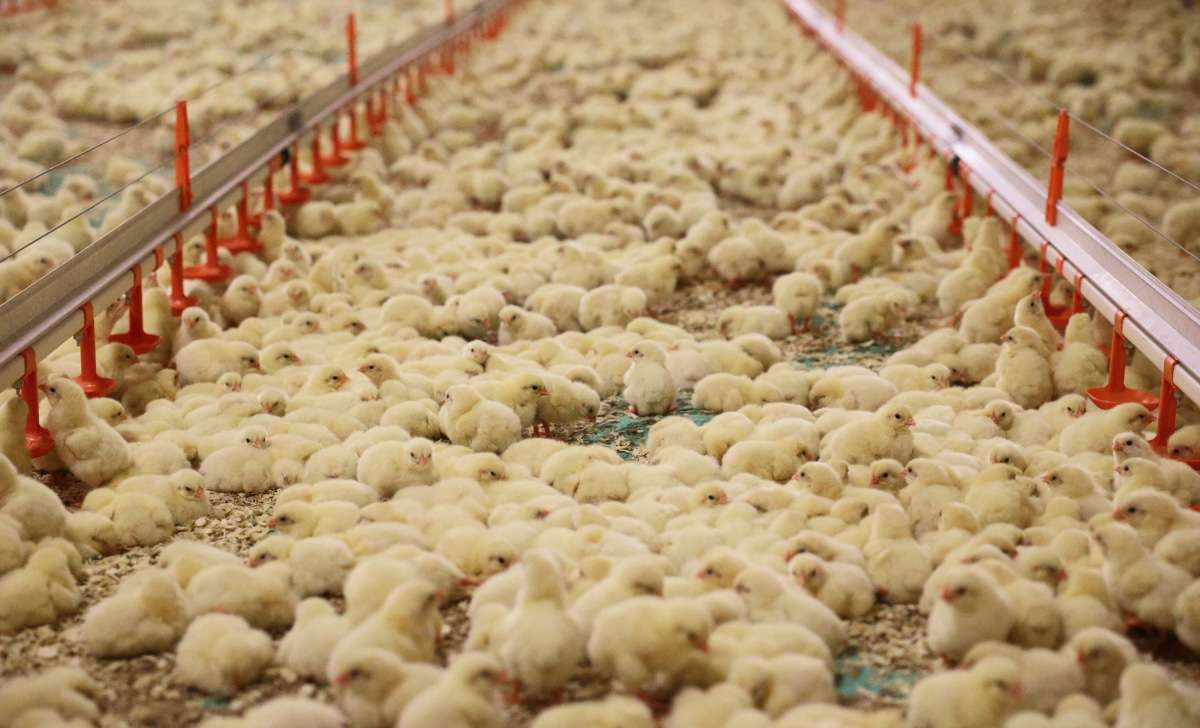
A chicken waterer system shapes far more than hydration. It affects litter moisture, labor hours, and how quickly a manager spots a problem before it shows up on the scale. In commercial production, drinker choice is less about brand preference and more about how much automation a house can support.
Automatic Chicken Waterer Systems: Closed and Open Designs
An automatic chicken waterer refills itself without staff topping off a container, whether through a pressurized nipple line or a float valve feeding an open reservoir. Commercial flocks overwhelmingly favor closed nipple systems, though automatic float-fed bell and cup drinkers still appear in some breeder and layer houses (Cobb-Vantress, 2021).
The same automation trend applies to flock weighing. Many operations layer continuous weight data collection on top of manual sampling rather than replacing it, since hands-on checks still catch welfare issues a scale alone won’t.
Nipple Waterer Systems: Flow, Pressure and Height
A nipple waterer delivers water through a small pin activated by the bird’s beak, keeping litter drier and reducing contamination compared with open reservoirs (Cobb-Vantress, 2021). High-flow nipples run at roughly 80 to 90 ml per minute for about 12 birds each, while low-flow lines run closer to 50 to 60 ml per minute for around 10 birds per nipple (Cobb-Vantress, 2021).
Height and pressure need regular adjustment as birds grow, and water pooling in a drip tray signals pressure set too high. Managers checking a suspected flow issue often confirm it against real bird condition through routine flock sampling, cross-checking drinker output with actual growth.
Bell and Cup Systems: What the Research Shows
Open bell and cup drinkers cost less to install but are harder to keep clean, since birds introduce litter and feed into the reservoir (Cobb-Vantress, 2021). Peer-reviewed behavioral research found broilers visit bell drinkers less often than nipple lines, but drink more per visit (Bruno et al., 2011).
In broiler breeders, hens on bell drinkers produced heavier eggs with higher shell quality, while nipple-drinker litter stayed measurably drier (Colvero et al., 2014). Neither system wins outright; the right choice depends on litter management priorities and available labor.
Maintenance: Flushing, Water Quality and Uniformity
In breeder flocks, uncontrolled water intake can undermine the feed restriction programs used to manage body weight, so producers check flock uniformity by weighing a sample and calculating the coefficient of variation.
If uniformity slips below the 65 percent threshold Cobb-Vantress sets for breeder pullets, the standard fix is another round of sorting and grading (Cobb-Vantress, 2020). That is the job of the BAT1 Sorting Machine: dividing birds into more uniform weight bands.
Do Heated Chicken Waterers Belong in Commercial Houses?
A heated chicken waterer with a thermostatic base is a small-flock solution designed to keep a single fount from icing over. Commercial houses solve the same freezing problem differently, through climate-controlled housing and heat-traced or insulated drinker lines rather than a standalone heated unit.
Why Water Data Belongs Next to Weight Data
A sudden drop in water intake often precedes a decline in growth, giving managers a warning sign before it appears on the scale.
The relationship is strongest in young birds. Newly hatched chicks carry proportionally more water in their tissue than older broilers, and Cobb-Vantress names low water consumption as the leading cause of early weight gain shortfalls (Cobb-Vantress, 2020; Caldas et al., 2019).
Some operations verify this link with the BAT1 manual poultry scale, sampling birds by hand the same day consumption looks off.
Others run the BAT2 Connect automatic scale alongside their drinker lines to keep growth data current.
Logging both figures in BAT Cloud lets managers compare consumption and weight trends side by side, no matter which house they’re reviewing.
References
Bruno, L.D.G., Maiorka, A., Macari, M., Furlan, R.L., & Givisiez, P.E.N. (2011). Water intake behavior of broiler chickens exposed to heat stress and drinking from bell or and nipple drinkers. Revista Brasileira de Ciência Avícola, 13(2), 147–152. https://www.scielo.br/j/rbca/a/njgK3hnZRGdSzzs37KPwGfL/?format=pdf&lang=en
Cobb-Vantress, Inc. (2020). Breeder Management Guide. https://www.cobb-vantress.com/assets/Cobb-Files/80a75d5bbe/Breeder-Management-Guide.pdf
Cobb-Vantress, Inc. (2021). Broiler Management Guide. https://www.cobb-vantress.com/assets/Cobb-Files/4d0dd628b7/Broiler-Guide_English-2021-min.pdf
Colvero, L.P., Carrijo, A.S., Garófallo, R.G., Bernardi, R., Steffen, R.P.B., & Stefanello, C. (2014). Production aspects of broiler breeders submitted to different drinker types. Revista Brasileira de Ciência Avícola, 16(1), 61–65. https://www.scielo.br/j/rbca/a/YWRZmLJWmGZpWHMffysjrDJ/?lang=en